Ordinære™ | The Original Monobloc Rocking Chair

The Original Monobloc Rocking Chair

The ordinary,re-authored.

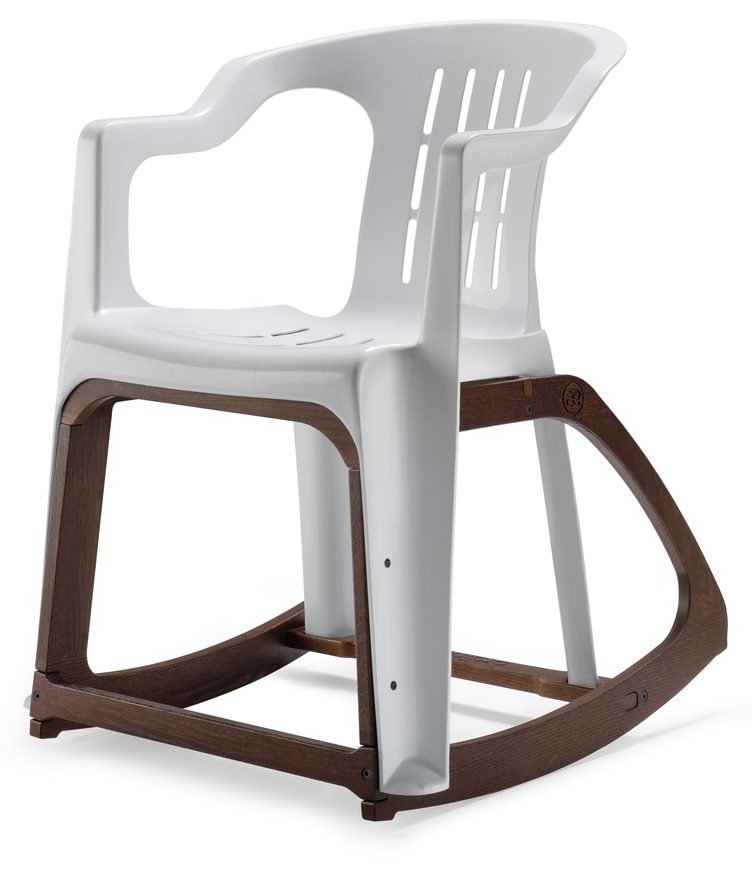
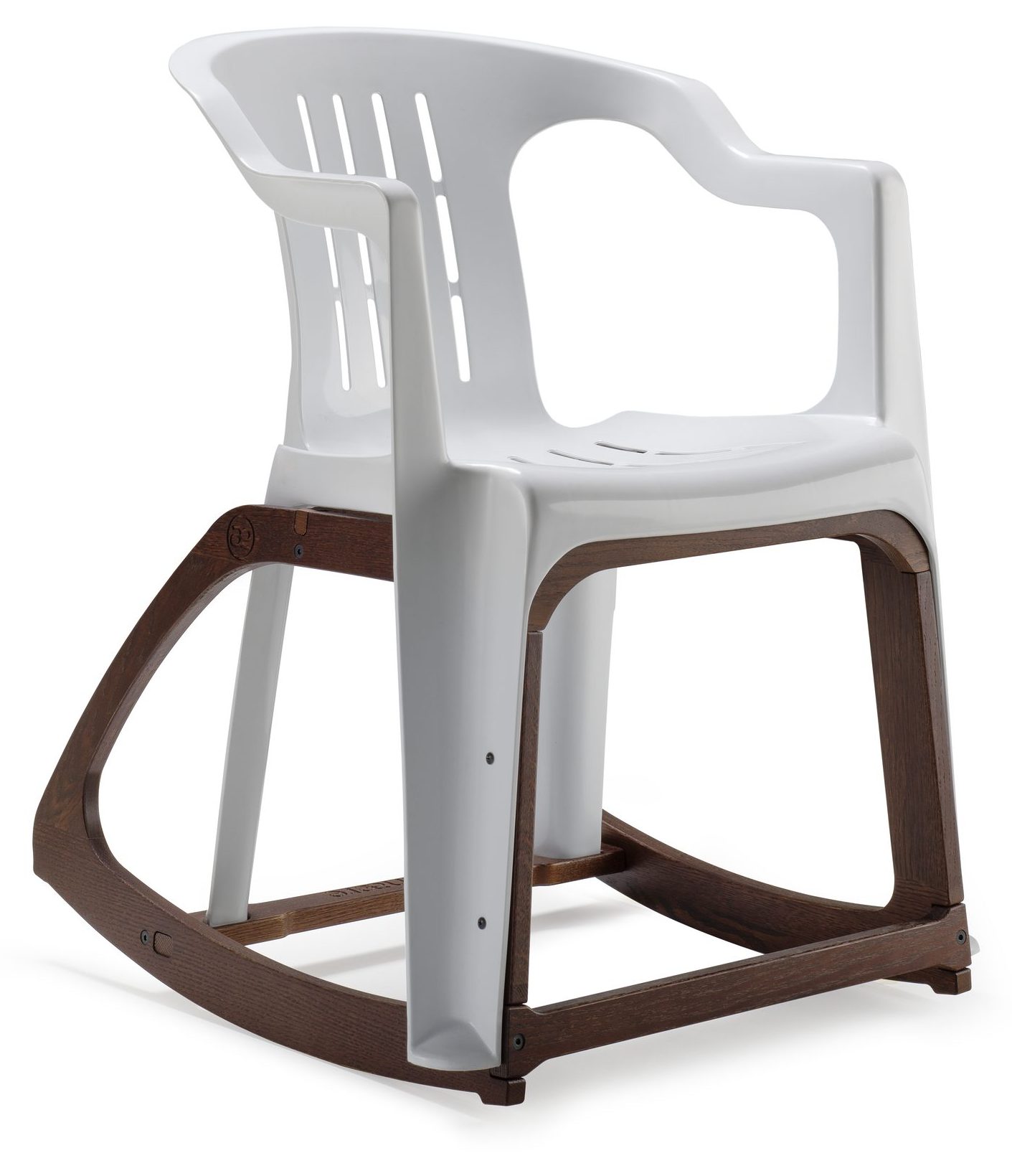
The world's most common chair, given an author and taught to rock. A polypropylene monobloc on handcrafted American oak rockers.

Hello Original.

Made in ItalyDesign patent€995

A love letter to the monobloc

You know a monoblocwhen you see one.

A single sweep of plastic, four legs that taper like a memory, a backrest perforated by pragmatic geometry. Anonymous and unavoidable. ORDINÆRE descends from two industrial ancestors: the bentwood rocker and the monobloc.

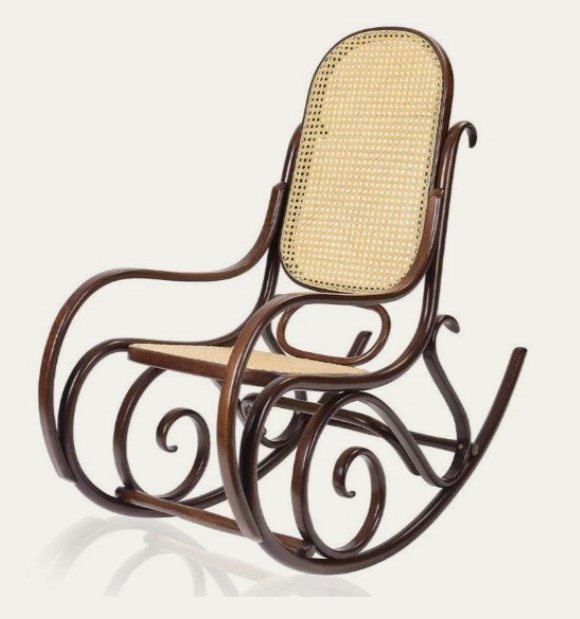
  1. c. 1860Thonet's bentwood Schaukelfauteuil No. 1 turns the rocking chair into an industrial object.
  2. 1964Helmut Bätzner's Bofinger Chair proves a chair can be one continuous shell.
  3. 1965–67Joe Colombo's Universale for Kartell: injection-moulded plastic becomes furniture.
  4. 1969Vico Magistretti's Selene brings stackability and structural curves.
  5. 1972Henry Massonnet's Fauteuil 300: one cycle, polypropylene, stackable by the dozen.
  6. 1970s–90sThe clones become infinite: Grosfillex in France, Nardi and IPAE Progarden in Italy, Resol in Spain, Keter Allibert, Siesta Exclusive in Turkey, DiPlastica Duna, Tramontina in Brazil, Cosmoplast in the UAE and Nilkamal, Supreme and Cello in India.
  7. 2017The Vitra Design Museum crowns it a chair for the world.
  8. 2025Bad Bunny puts the white plastic chair on his album cover.
  9. TodayORDINÆRE gives the anonymous chair an author, and makes it rock.
Thonet bentwood rocking chair with a cane seat and back
The ancestor: Thonet's Schaukelfauteuil, c. 1860.
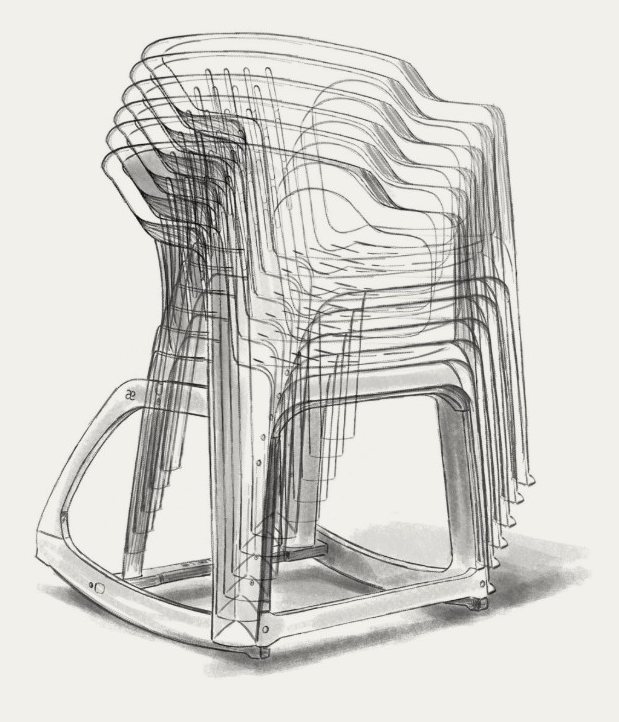
Pencil drawing of many monobloc chairs stacked on a single set of rockers
Infinite clones, one rocker.

Its very ordinariness had become its cultural charge.

Read the full love letter ↓

The monobloc in culture

From the gardento the museum.

The cheapest chair in the world now has a museum show, a feature film and an album cover with tens of millions of streams. Nobody designed it for any of them.

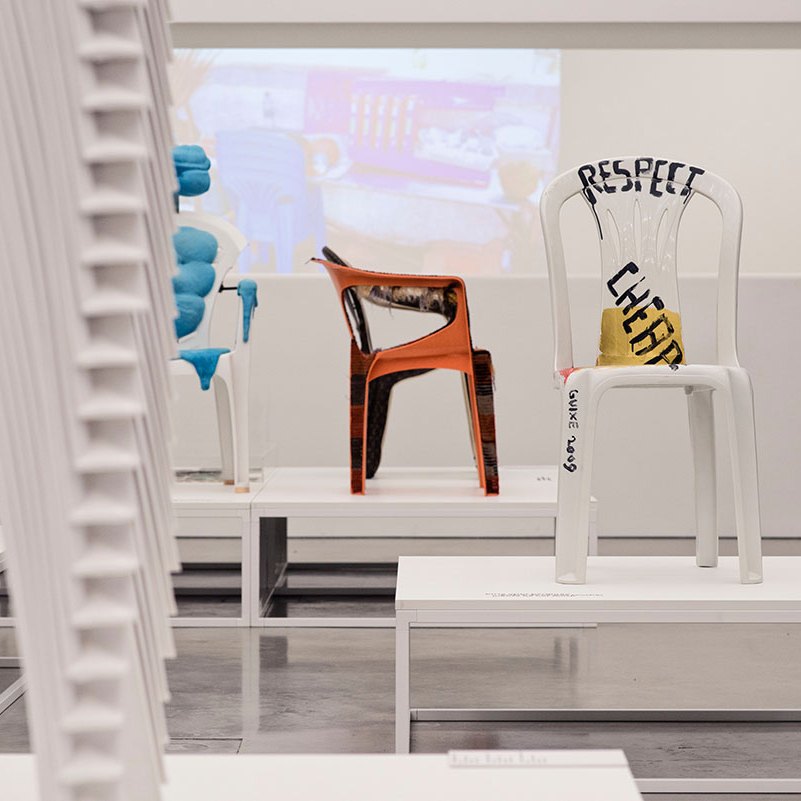
Customised monobloc chairs displayed on white plinths in a museum, one painted with the words Respect Cheap
ExhibitionOn the plinth: the anonymous chair as museum object.
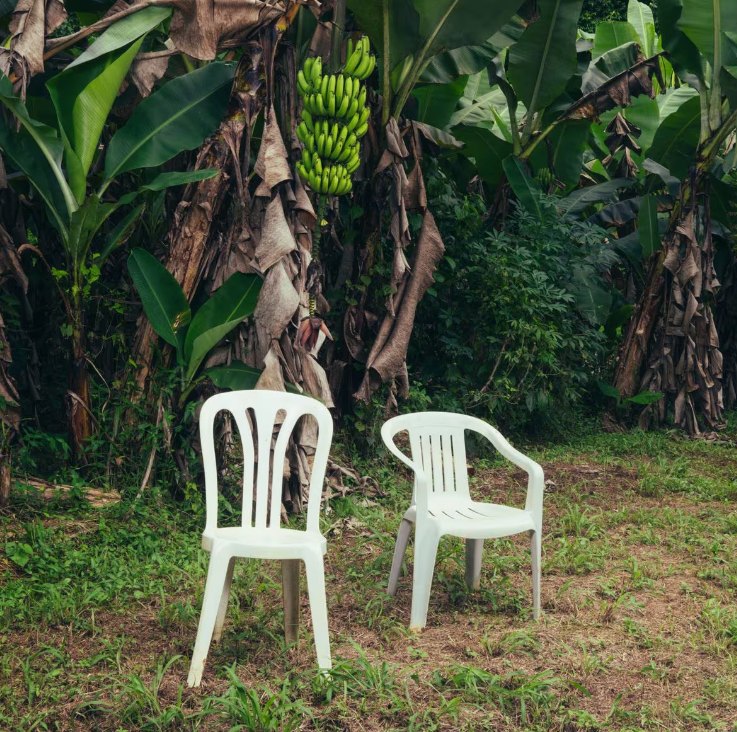
Two white plastic chairs on the grass in front of banana plants
Album coverTwo white plastic chairs among the banana plants.
  1. 2017Monobloc: A Chair for the World, Vitra Design Museum Schaudepot, Weil am Rhein. The first museum show devoted to the chair.
  2. 2018Chair Times, a film by Heinz Bütler with the Vitra Design Museum. Rolf Fehlbaum walks through 125 chairs from the collection: a history of seating, told by the chairs that got a name. Watch the film
  3. 2021Monobloc, a documentary by Hauke Wendler. Ninety minutes across five continents on how one plastic chair became the world's best-selling piece of furniture. Watch the trailer
  4. 2025Bad Bunny's Debí Tirar Más Fotos: two white plastic chairs as the cover of one of the year's biggest albums.
  5. SoonUnattributed: 100 Masterpieces of Ordinary Design, an et cætera book. More below

Printed on every Monobox

A Love Letterto the Monobloc.

You know a monobloc when you see one. A single sweep of plastic, four legs that taper like a memory, a backrest perforated by pragmatic geometry. It is at once anonymous and unavoidable—present in gardens and ministries, beach bars and biennales. Here we tell the story of how a chair without an author [aka Unknown, Mostly] became the most recognizable seat on earth, and how, in the twenty-first century, designers are rewriting its fate.

Origins: From Experiment to Archetype (1950s–1970s)

The monobloc is the child of two revolutions: polymer chemistry and high-pressure injection molding. In post-war Europe, engineers and designers began to imagine seating formed in a single shot, without screws, dowels, or upholstery. Early landmarks dot the road to the archetype: Helmut Bätzner’s Bofinger Chair (1964) in fiberglass reinforced polyester showed that a chair could be one continuous shell; Joe Colombo’s Chair Universale 4867 for Kartell (1965–67) proved injection molded plastic could be furniture, not just casing; Vico Magistretti’s Selene for Artemide (1969) brought stackability and elegant structural curves into the conversation. Then came the breakthrough that fixed the template in the public imagination. In 1972, French engineer Henry Massonnet launched the Fauteuil 300 at STAMP, his family firm in the French Jura. Molded in polypropylene in a single cycle, the chair was light, strong, weather resistant, and—crucially—stackable by the dozen. It could be produced in minutes and sold for a fraction of the cost of timber or metal seating. Massonnet didn’t merely design a chair; he industrialized a method. The monobloc, as a type, had arrived.

Industrialization: Makers of a Global Form (1970s–1990s)

Once the technology stabilized, production blossomed. In France, Grosfillex and Allibert refined resin furniture for gardens and cafés; in Italy, companies like Kartell, later Nardi and SCAB, iterated on outdoor typologies; in Spain, Resol supplied hospitality markets; in Israel, Keter pushed resin know-how into global distribution. Outside Europe, Tramontina (Brazil), Rimax (Colombia) and Indian giants Nilkamal and Supreme scaled up mass production, while OEM factories across North Africa and Asia supplied export markets. By the 1980s, the ‘generic’ silhouette had gelled: a slightly splayed stance, slatted back, broad arms that read as structure and comfort. The chair became an infrastructural object—neutral enough to be anywhere, cheap enough to be everywhere. In the early 1990s, the Italian manufacturer IPAE ProGarden captured this maturity with its 1992 model: UV stabilized, highly stackable, optimized for automated cycles. The pattern was set; the clones were infinite.

Culture: Icon, Critique, Collectible (2000s–Today)

Ubiquity invites judgement. In the 2000s the monobloc was mocked as a symbol of disposability—and simultaneously acquired by design museums. The Vitra Design Museum’s 2017 exhibition Monobloc: A Chair for the World traced the paradox: a form that democratized seating yet also embodied the externalities of mass production. Designers proposed counternarratives: Jasper Morrison’s Air series refined the type with gas assisted molding; limited editions explored fiber reinforcement, metallic skins, or recycled feedstocks. Pop culture kept pace. In 2025, music artist Bad Bunny folded the white plastic chair into his album visuals—the cover of Debí Tirar Más Fotos—as a shorthand for shared memory: the backyard gathering, the block party, the family table. The monobloc’s very ordinariness had become its cultural charge.

Ordinære: A Chair Re-Authored

In the quiet, slowed-down days of the 2020 pandemic, Dutch designer Enrique Jungbauer met Australian artist Rodney Glick in Bali. The island was hushed, its streets emptied, its pace reset. Over countless cups of coffee at Glick’s Seniman Café, the two found themselves with something rare: time. Glick had first played with the idea of a rocking monobloc chair years earlier, in 2013 — a simple, almost mischievous transformation of the world’s most common seat. Now, with the world on pause, the pair began to imagine how that idea could be refined, elevated, and shared far beyond Bali. What started as a local experiment became a global project: the birth of ORDINÆRE – the Original Monobloc Rocking Chair. It may look like something anyone could copy — and many might try — but this is a design with an author, a story, and a signature. Every curve, every joint, every rocker is intentional. And in a world awash with anonymous plastic, authorship matters.

Materials, Methods, Meanings

Technically, the monobloc is a lesson in structural economy. Ribs hide under thighs and along backrests to prevent creep; armrests thicken where load paths converge; pigments and UV stabilizers tune longevity against sun and salt air. Economically, the single-mold strategy collapses assembly and logistics costs. Socially, the chair is a bridge object: it seats opera-goers and street vendors alike, collapsing distinctions more effectively than manifestos ever could. If the monobloc is the world’s most ordinary chair, ORDINÆRE asks what happens when it is forced to move. The project takes an existing polypropylene monobloc seat and mounts it on precisely crafted wooden rockers — made in Italy — to form a hybrid that is both familiar and strange. The gesture is simple; the implications are not. Mass production meets mastery; utility meets eccentricity; ubiquity meets rarity.

Limited Editions

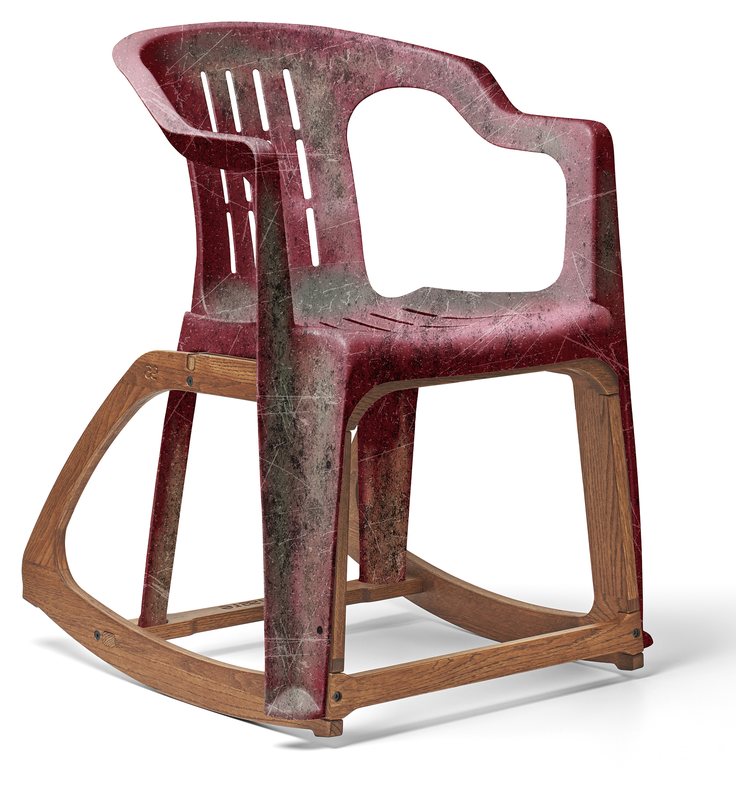
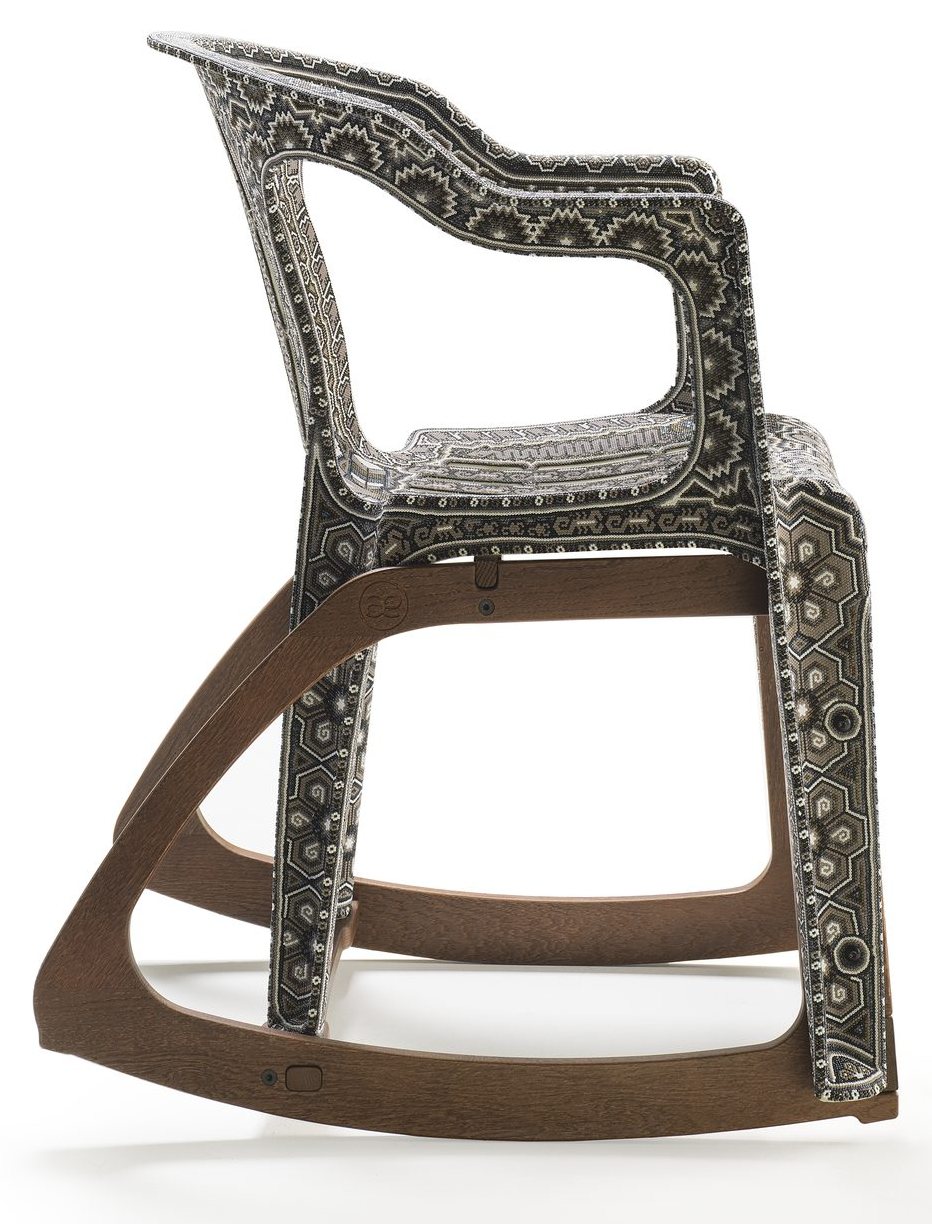
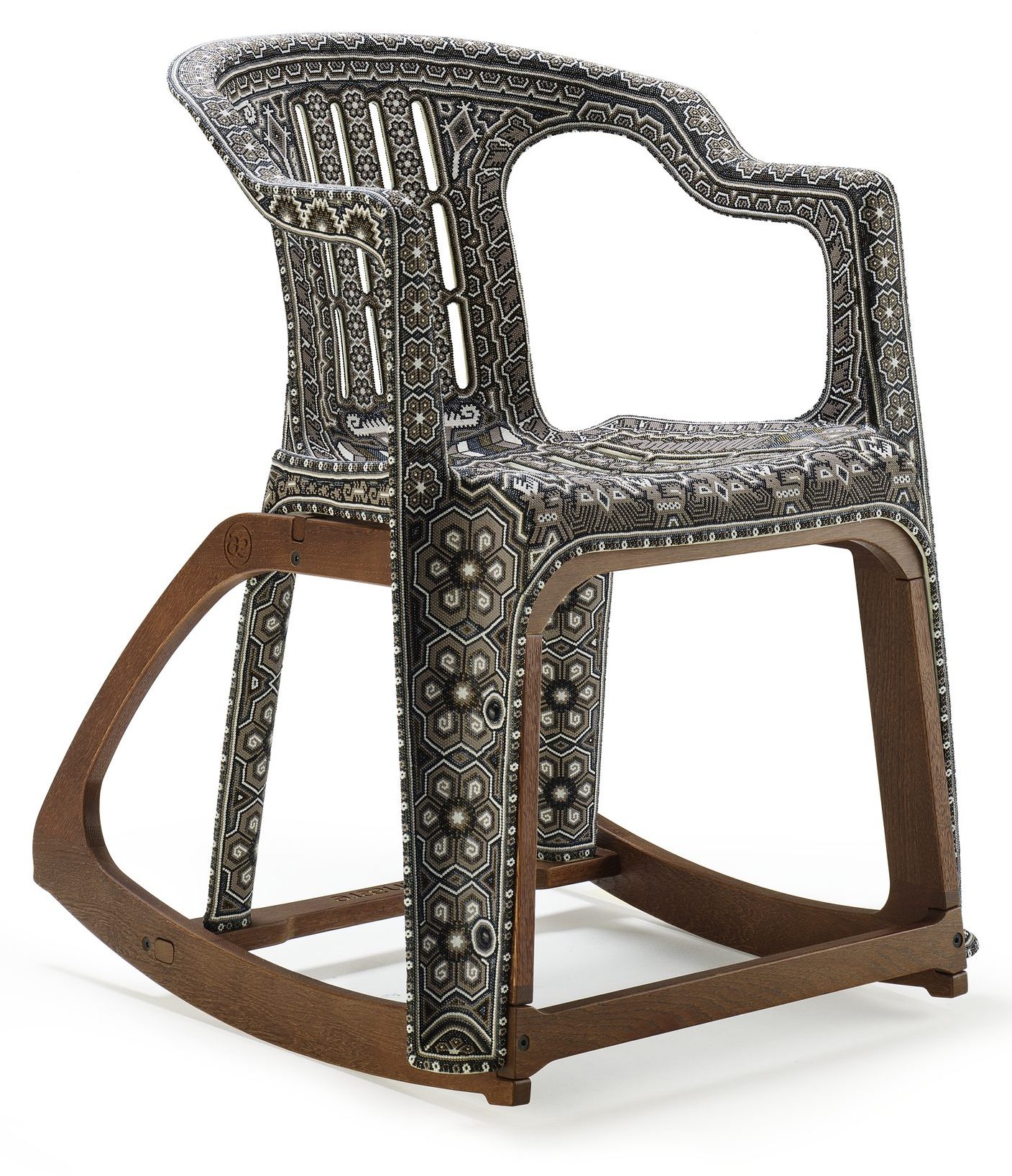
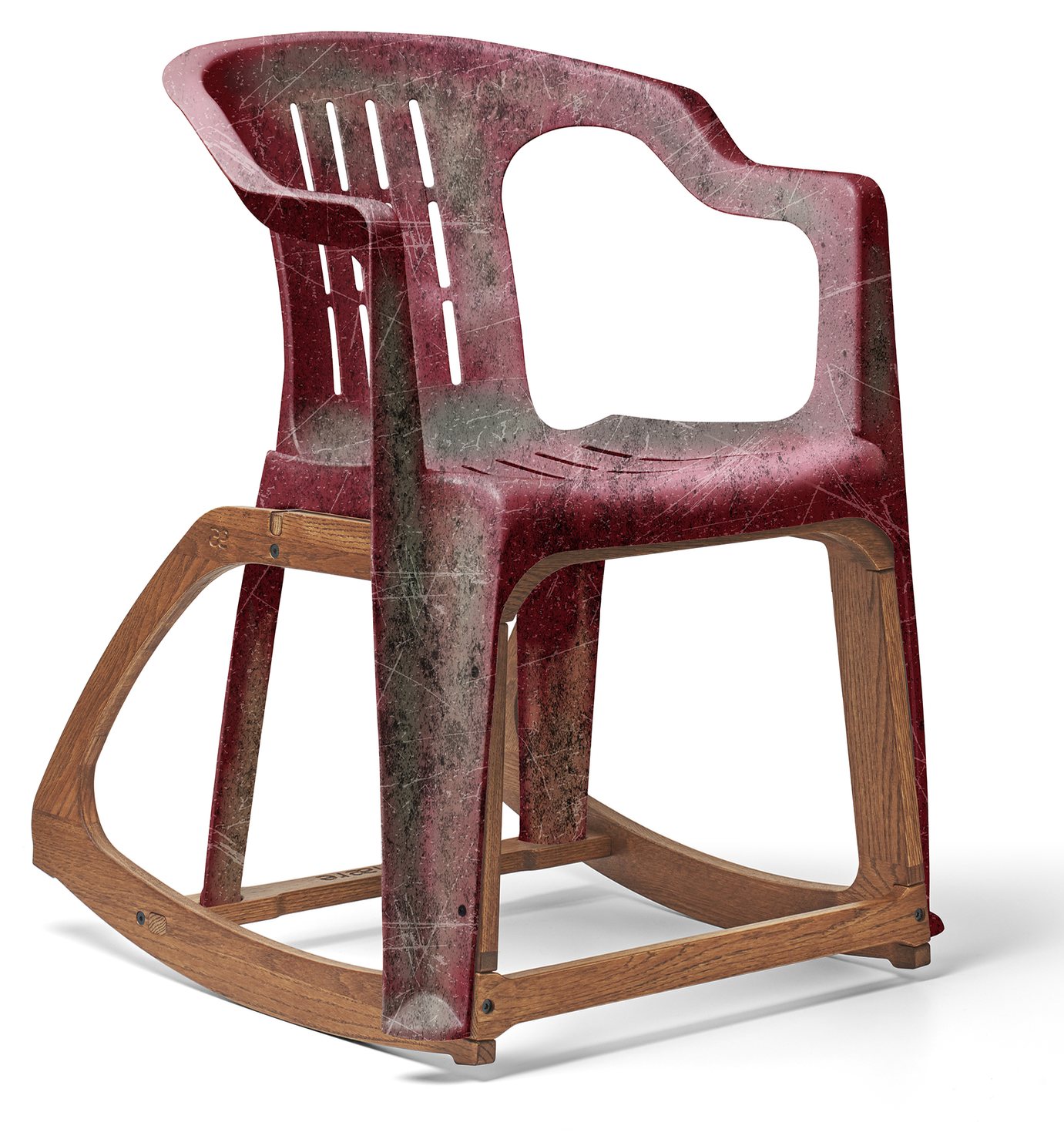
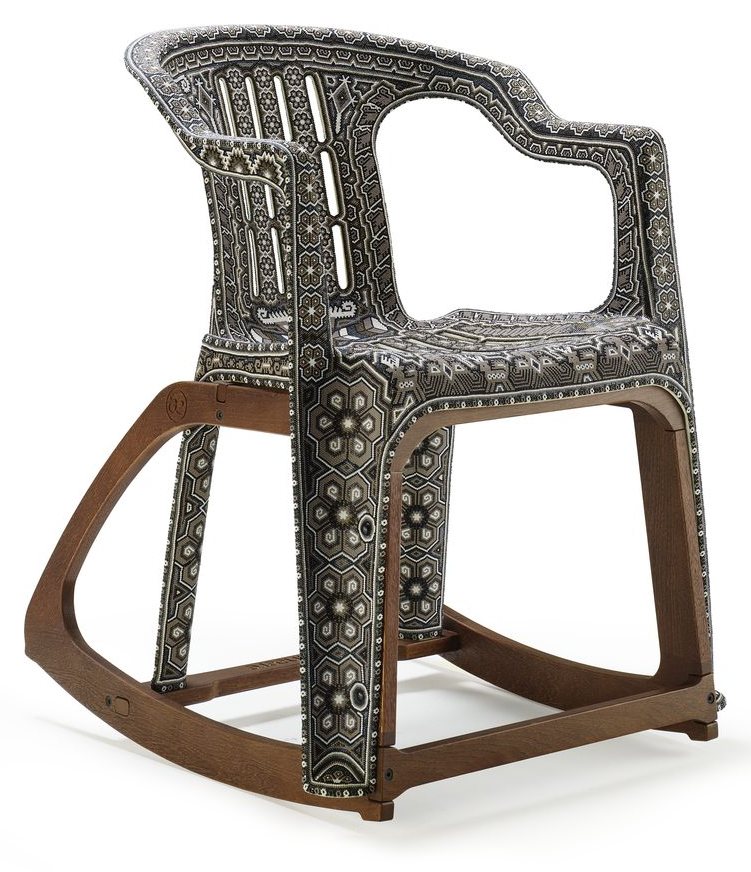
The core chair, ORIGINAL ONE, is made to order and not limited. Around it grows a family of editions that explore material, craft and cultural reference. PRELOVED (Edition of 9) is upcycled from rescued chairs, each bearing the marks of its former life. CHAQUIRA (Edition of 9) is covered by hand with more than 100,000 glass beads by Wixárika artisans in Nayarit, Mexico: a cultural artefact to admire, not to sit in. And the next edition could be yours: artists, makers and brands are invited to collaborate.

The shape of taste

ORDINÆRE is also an argument for post-plasticism: not a naïve flight from polymers, but a critical re-staging of them—repairing, reusing, upcycling, and juxtaposing plastic with long-lived materials to extend narratives and lifespans.

Hello Original

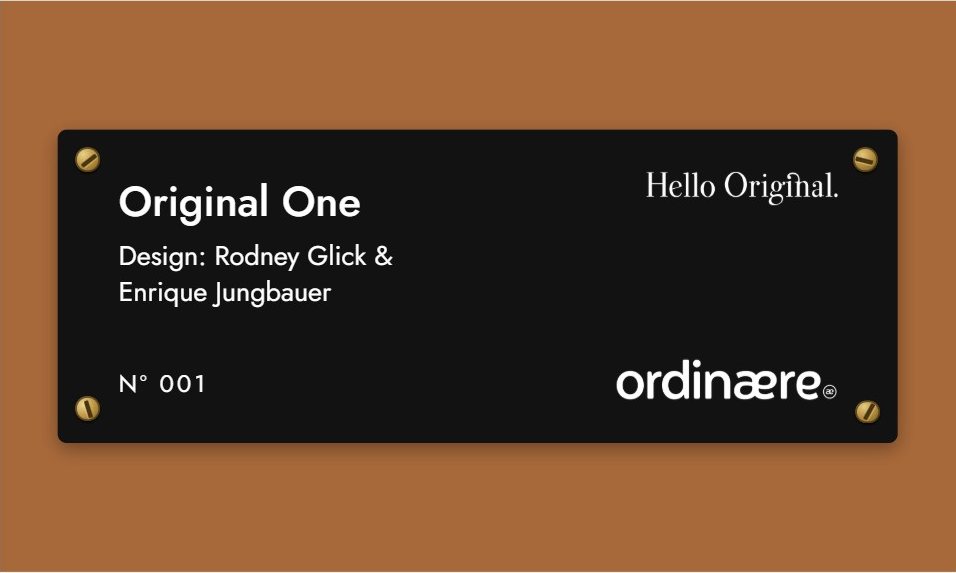
Every ORDINÆRE Original Monobloc Rocking Chair carries an Integrity Plate, numbered and signed, that confirms provenance and protects originality. Be original. Don’t copy.

Where It Belongs

ORDINÆRE is a chair for rooms that trade in ideas: the boardroom of a London agency where concepts earn their keep; the client suite of a law firm in New York where assurance and wit matter; the quiet of a high-end gallery in Tokyo where seating can be sculpture; the charged spaces of architecture biennales where objects argue in public. It is a contemporary meeting chair—for extraordinary meetings, for chair aficionados, for people determined to live an original life. Handcrafted in Italy. Built to last. Come have a seat.
Be original. Don't copy.

Rodney Glick & Enrique Jungbauer

A chair re-authored

Everyone rocks back.Now it's allowed.

People everywhere tip back on plastic chairs. It's a universal instinct: a small moment of comfort, a playful pause. And everyone knows what happens next. Sooner or later the legs give way and someone ends up on the floor. So we gave the chair what it was always asking for.

The world's most common seat. Polypropylene, one shot.

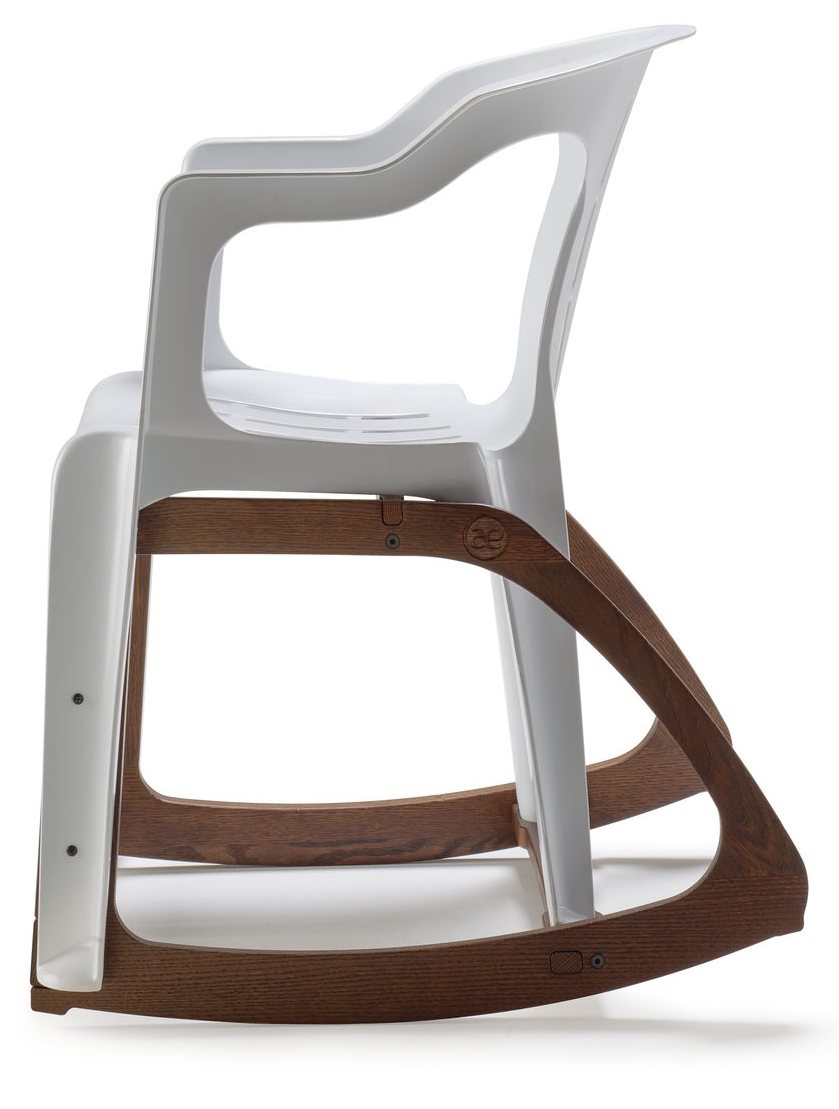
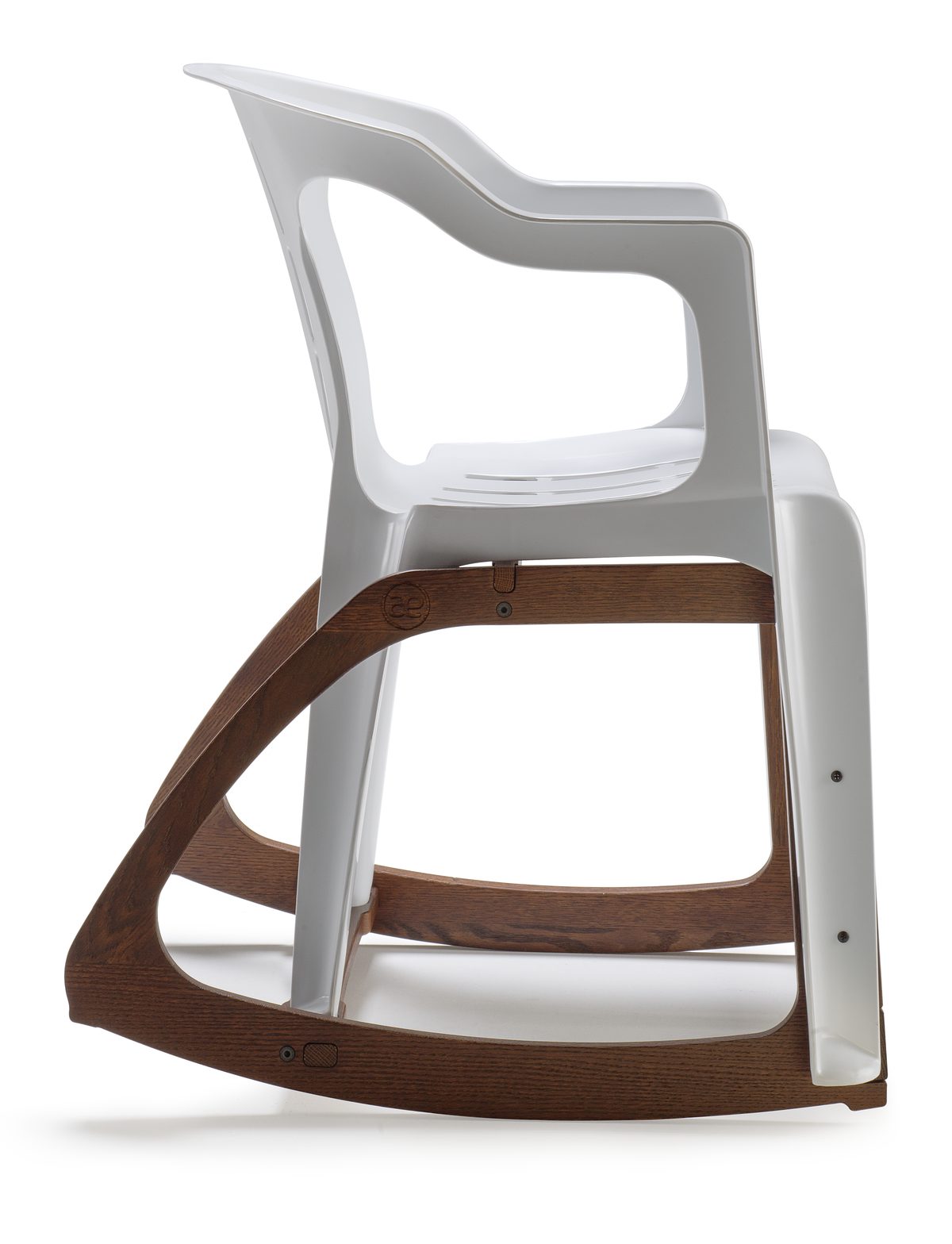
Side view of the chair on its curved oak rockers

The rocker fixes the monobloc's weak point: its legs.

Portrait of Enrique Jungbauer, co-designer of Ordinære
Enrique Jungbauer

Bali, 2020. In the slowed-down days of the pandemic, Dutch designer Enrique Jungbauer met Australian artist Rodney Glick at his Seniman Café. Glick had first imagined a rocking monobloc in 2013. Over countless cups of coffee, the two refined it.

Portrait of Rodney Glick, co-designer of Ordinære
Rodney Glick

The result: a polypropylene monobloc on handcrafted American oak rockers, made in Italy. It went from “as cheap as possible” to “as precious as possible”. Mass production meets mastery.

In a world awash with anonymous plastic, authorship matters.

Rodney Glick & Enrique Jungbauer

The chair · SKU AE555P

OriginalOne

€995Incl. VAT · Made to order

“I could have been just another white plastic chair, spoiling the view or drowning in the ocean. But I was rescued, hacked and æsthetically upcycled into an extraordinary rocking chair.”

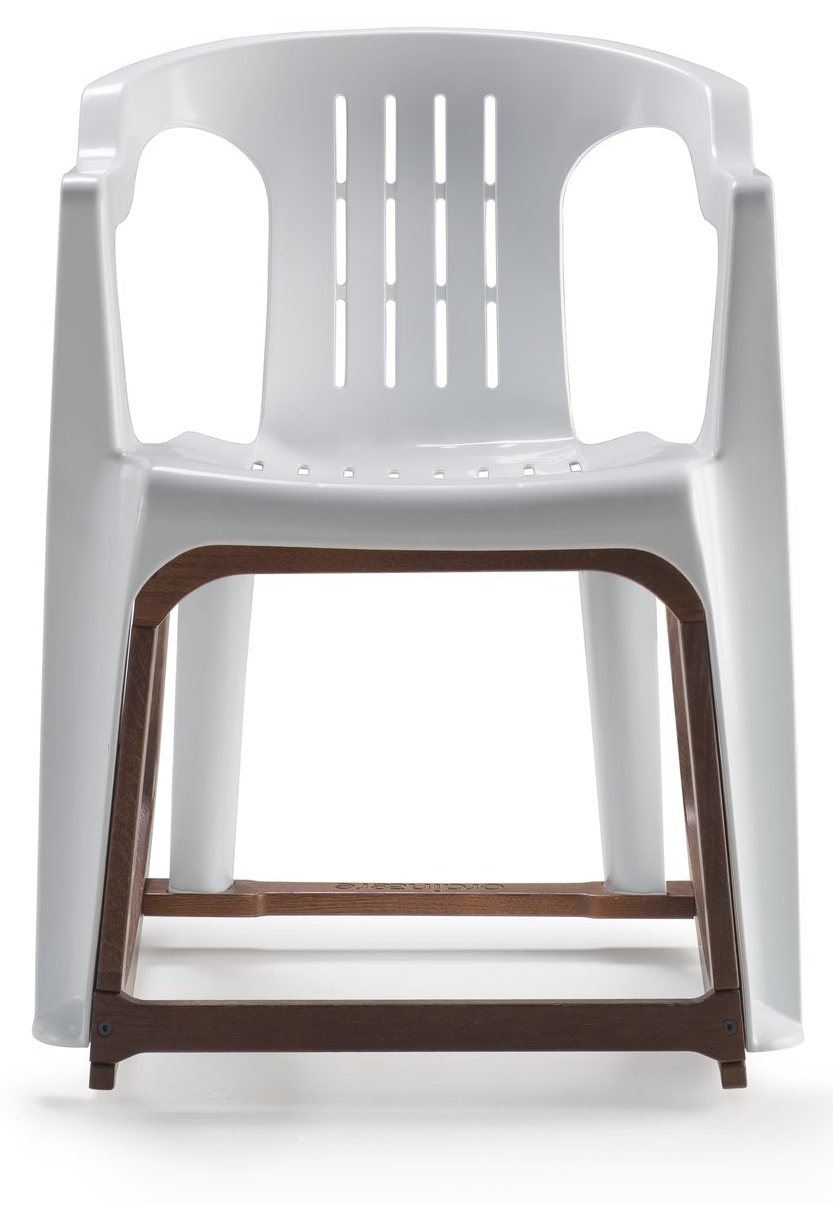
Original One from the front
front, composed
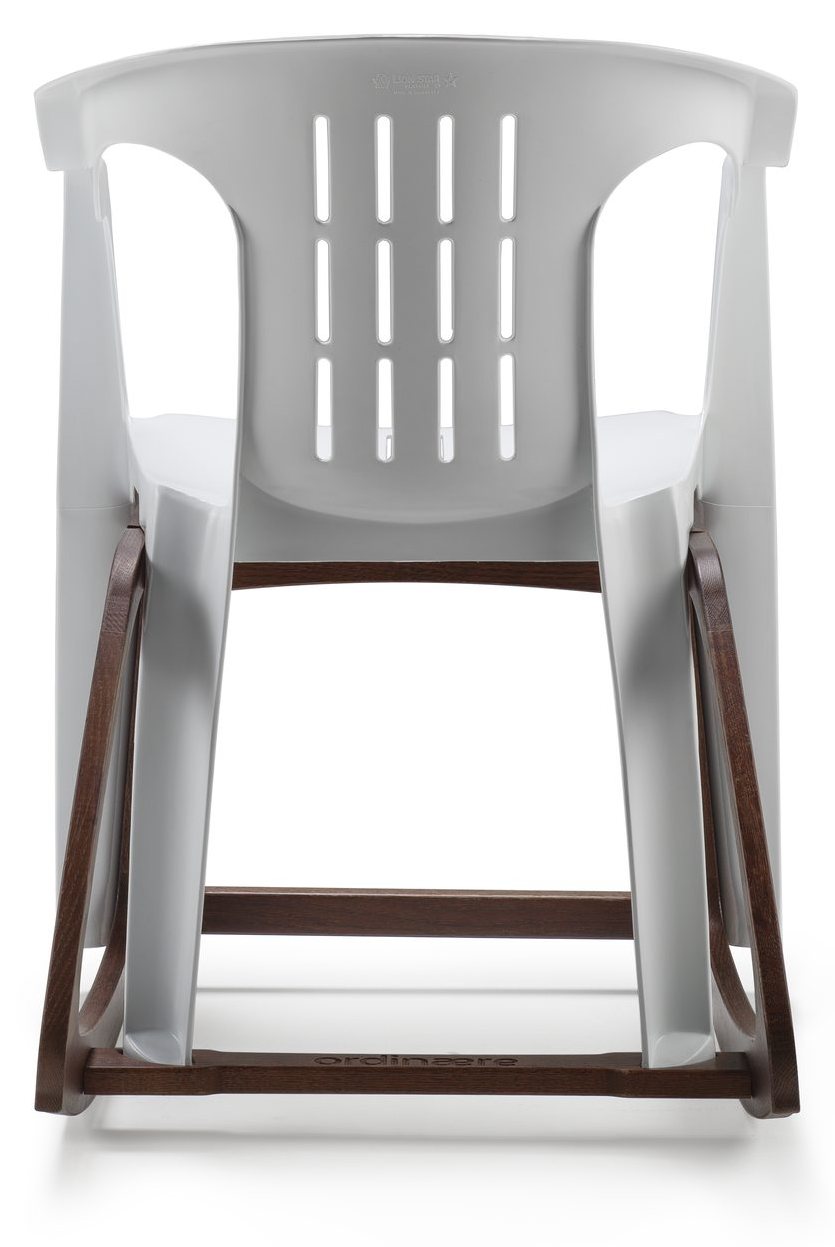
Original One from the back
back, unbothered
Original One from the side
side, mid-rock

An indoor chair for the living room, the studio, the meeting room. You only need one. Sit on it before you judge it: it rocks better than it looks.

Not your ordinarymonobloc.

Forget the flimsy plastic chair that bends at every barbecue. Original One is built on a custom monobloc of superior quality and finish, made to a far higher standard than the chairs it descends from.

You notice it the moment you touch it. And it resists weather and sun beautifully, season after season.

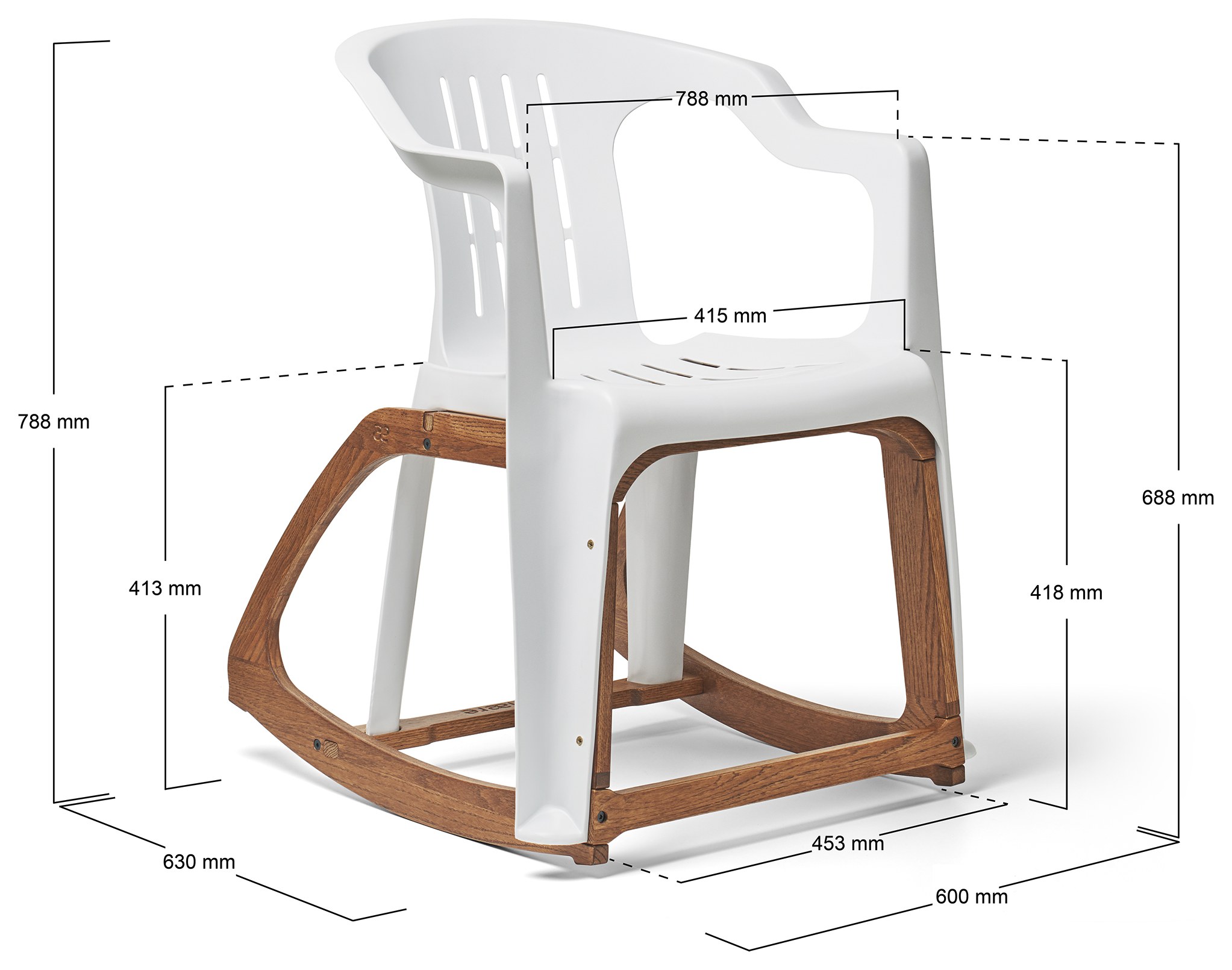
Original One photographed in three-quarter view with dimension lines: total height 788 mm, armrest height 688 mm, seat height 413 to 418 mm, seat width 415 mm, width 600 mm, depth 630 mm, rocker width 453 mm
Measured in millimetres.

Dimensions

Total height
784 mm
Seat height
425 mm
Backrest height
372 mm
Armrest height
270 mm
Total width
565 mm
Seat width
420 mm
Width between arms
470 mm
Depth (rockers)
630 mm
Back / seat angle
72° / 108°

Make

Designer
Rodney Glick & Enrique Jungbauer
Seat
Custom high-grade polypropylene monobloc
Rockers
Handcrafted American oak
Origin
Made in Italy
Protection
EUIPO Registered Design
Tested
AIDIMME · UNE-EN 581
Shipping box
800 × 610 × 640 mm
Boxed weight
5.9 kg
Authenticity
Numbered and signed
Designed for
Extra ordinary people

Close up

Oak, joinedby hand.

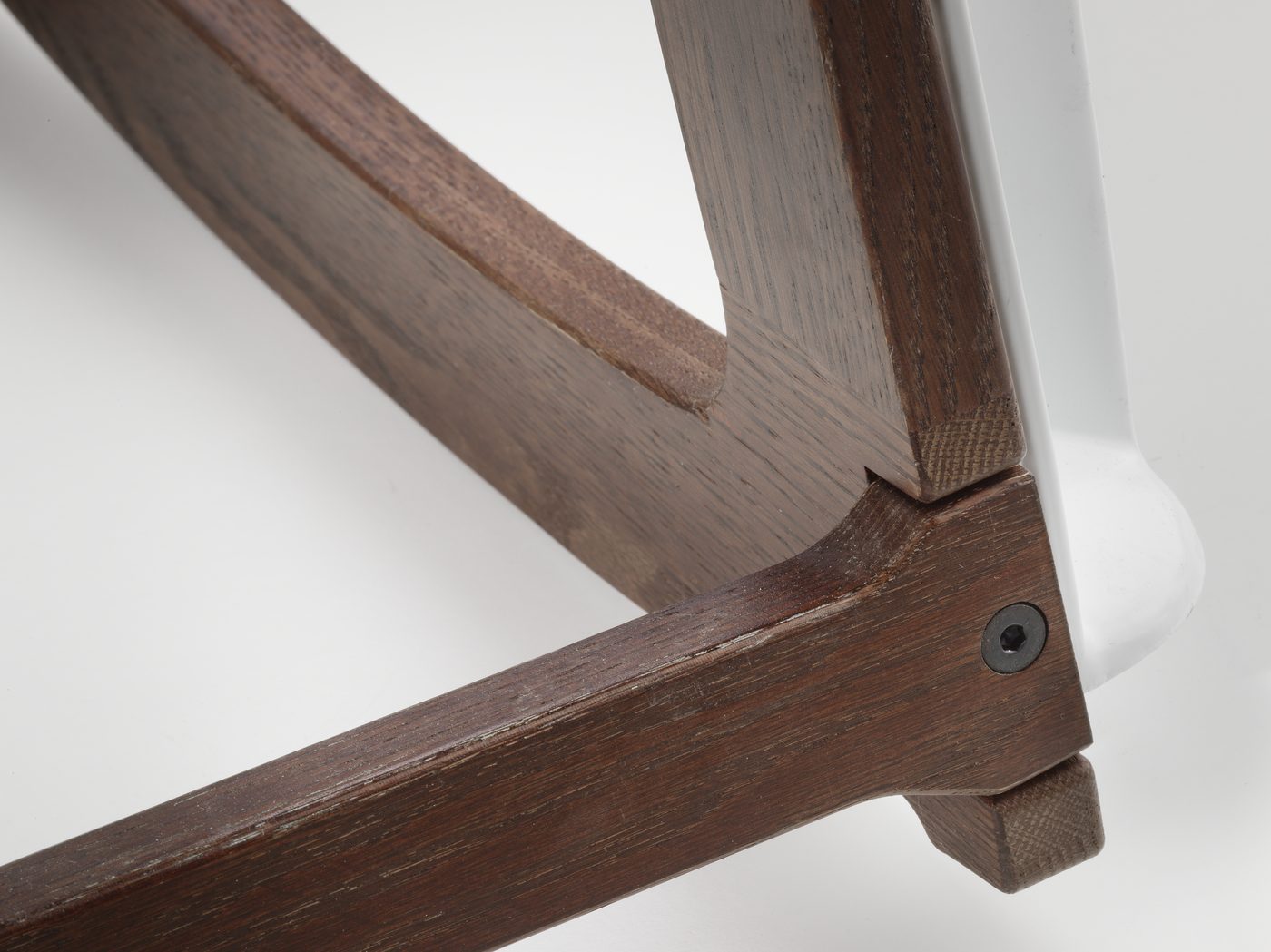
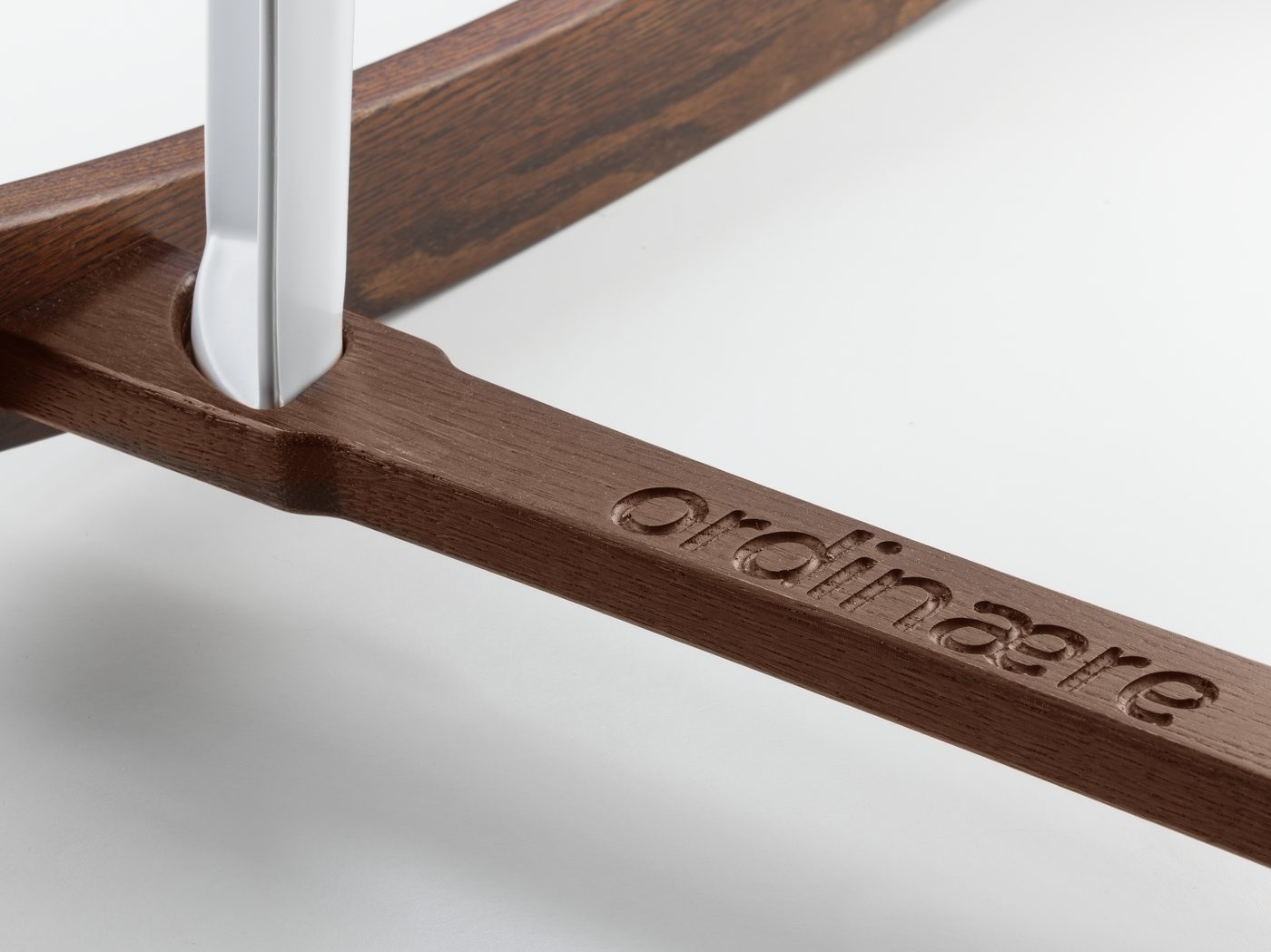
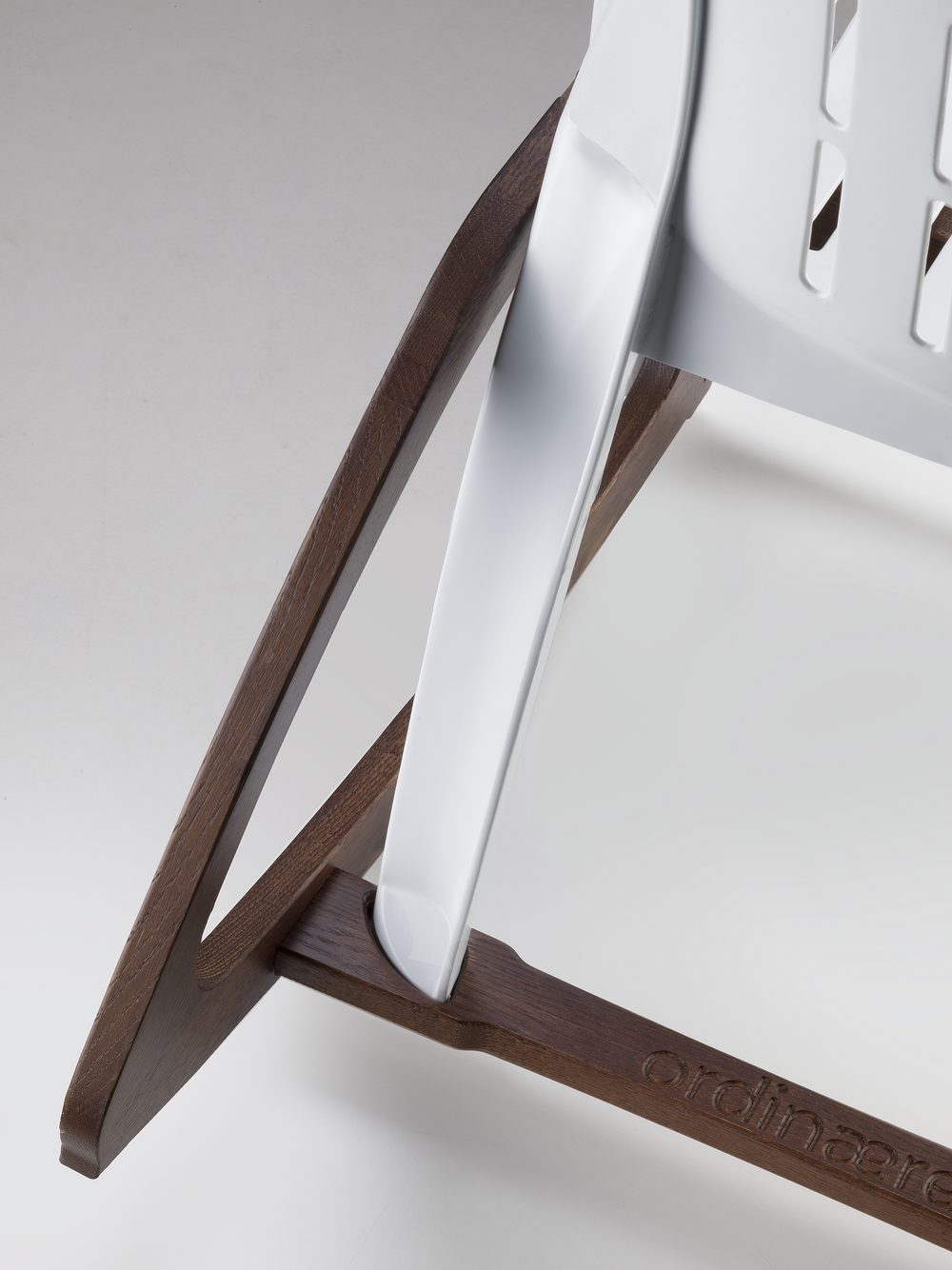
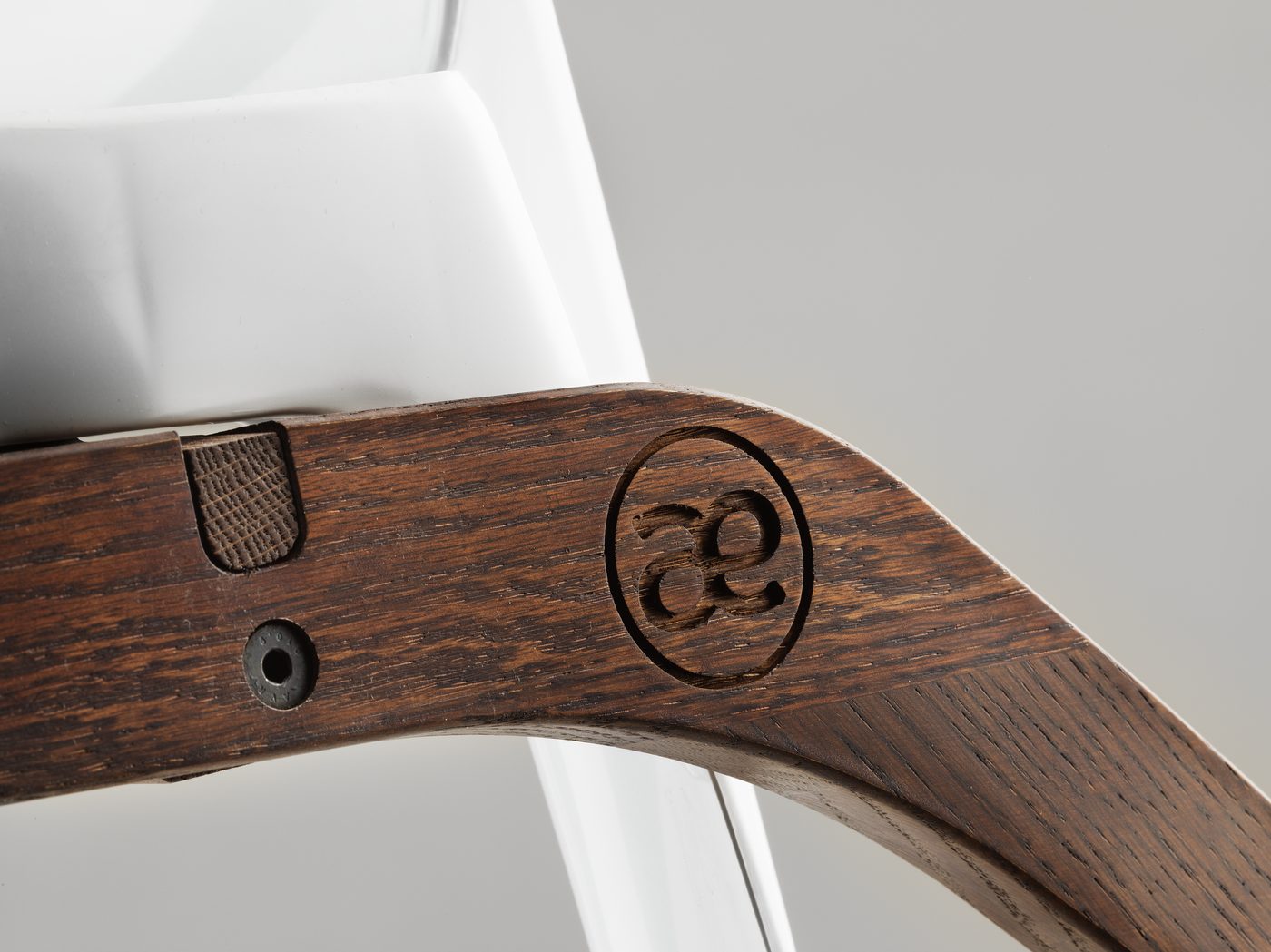
The rocker is cut, joined and finished in Trento. The æ is carved into the arm, the name into the runner, and every joint is fixed with a single bolt into the monobloc's leg.

Oak rocker joint with a single bolt into the monobloc leg
One bolt into the leg.
The word ordinaere engraved into the oak runner
The name, engraved into the runner.
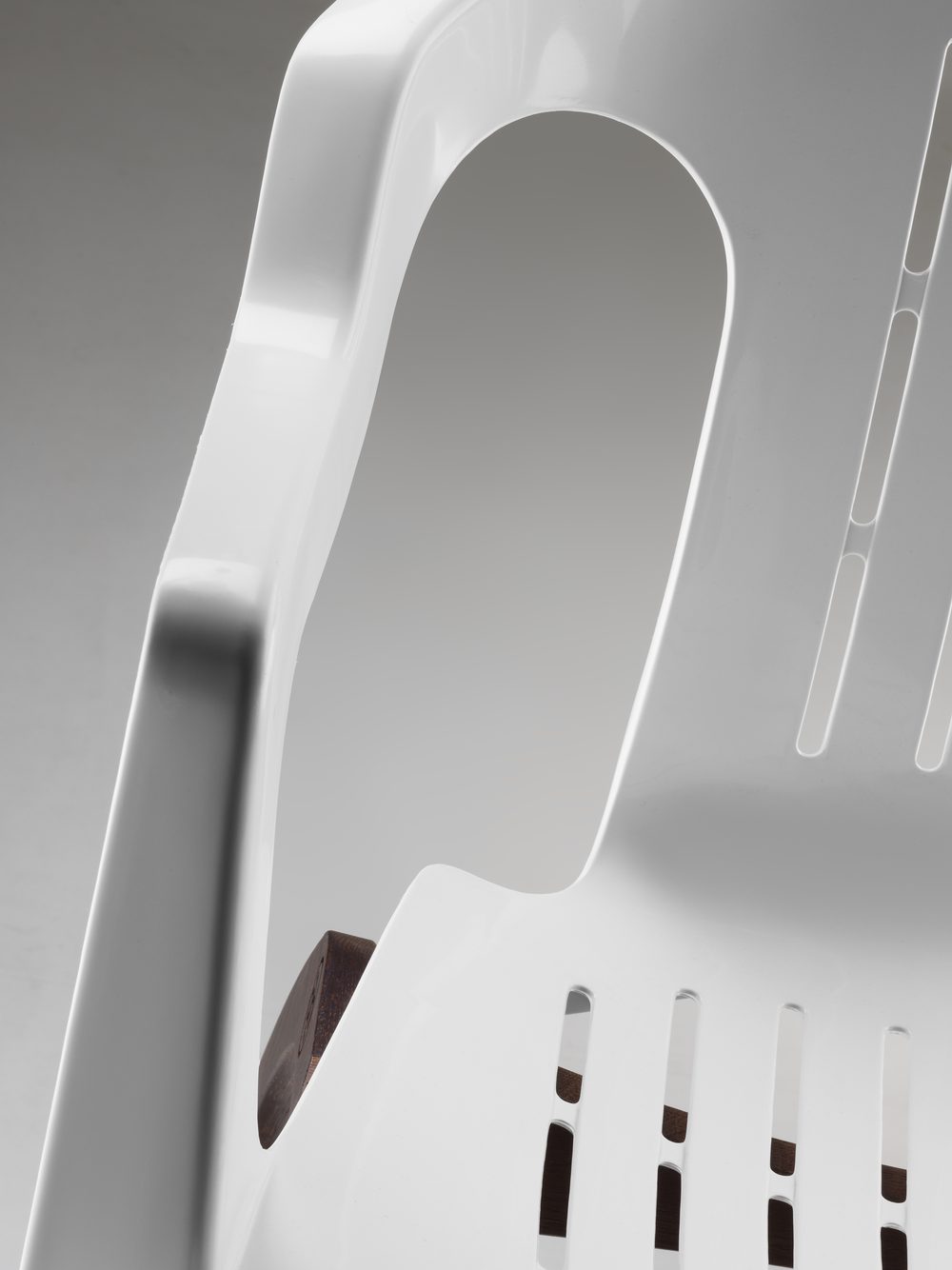
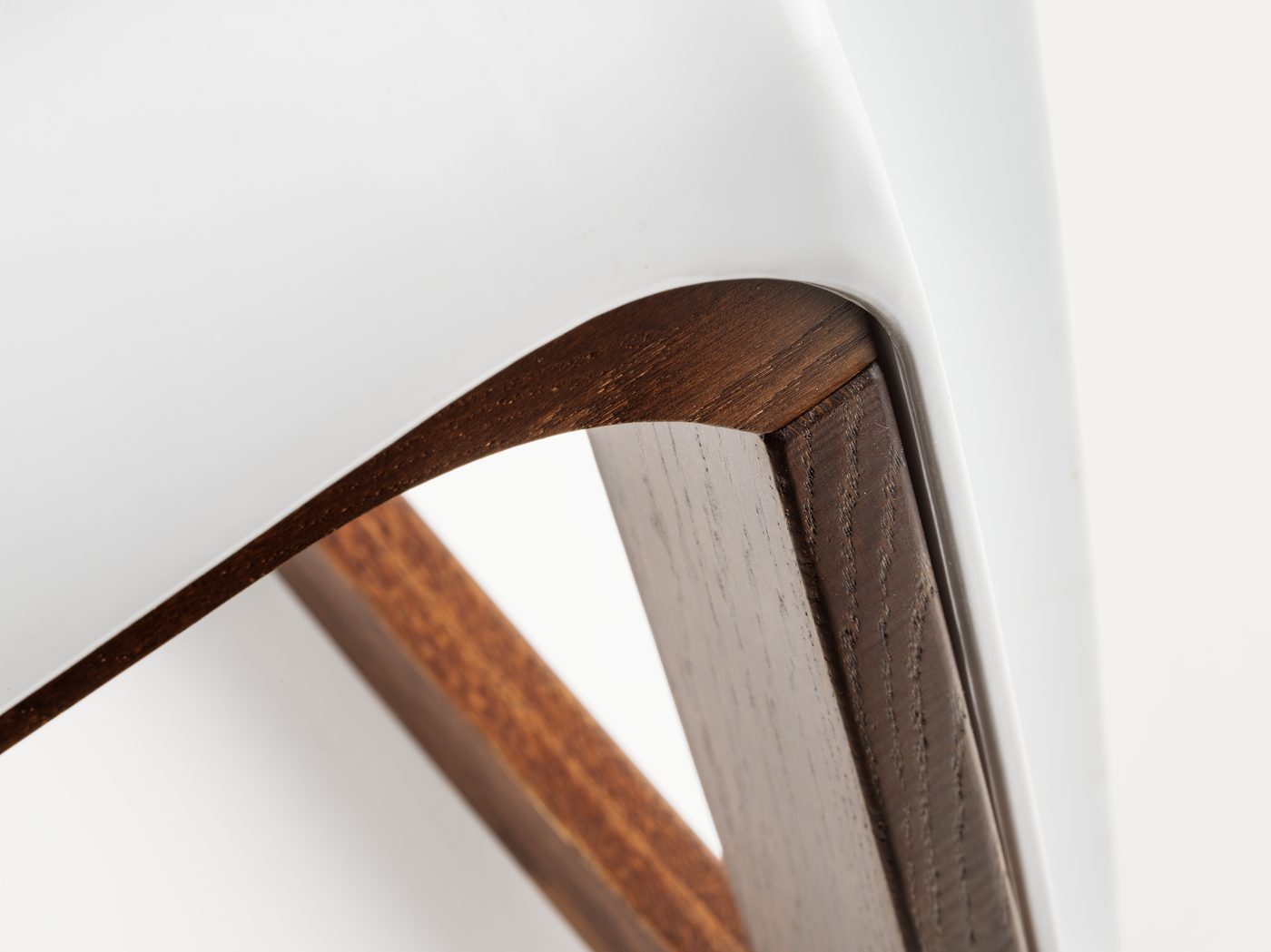
Close-up of the white polypropylene shell and its slotted seat
Polypropylene, one shot.
A monobloc leg seated in the oak frame
Leg into oak.
The curve of the oak rocker under the white seat
The curve that rocks.
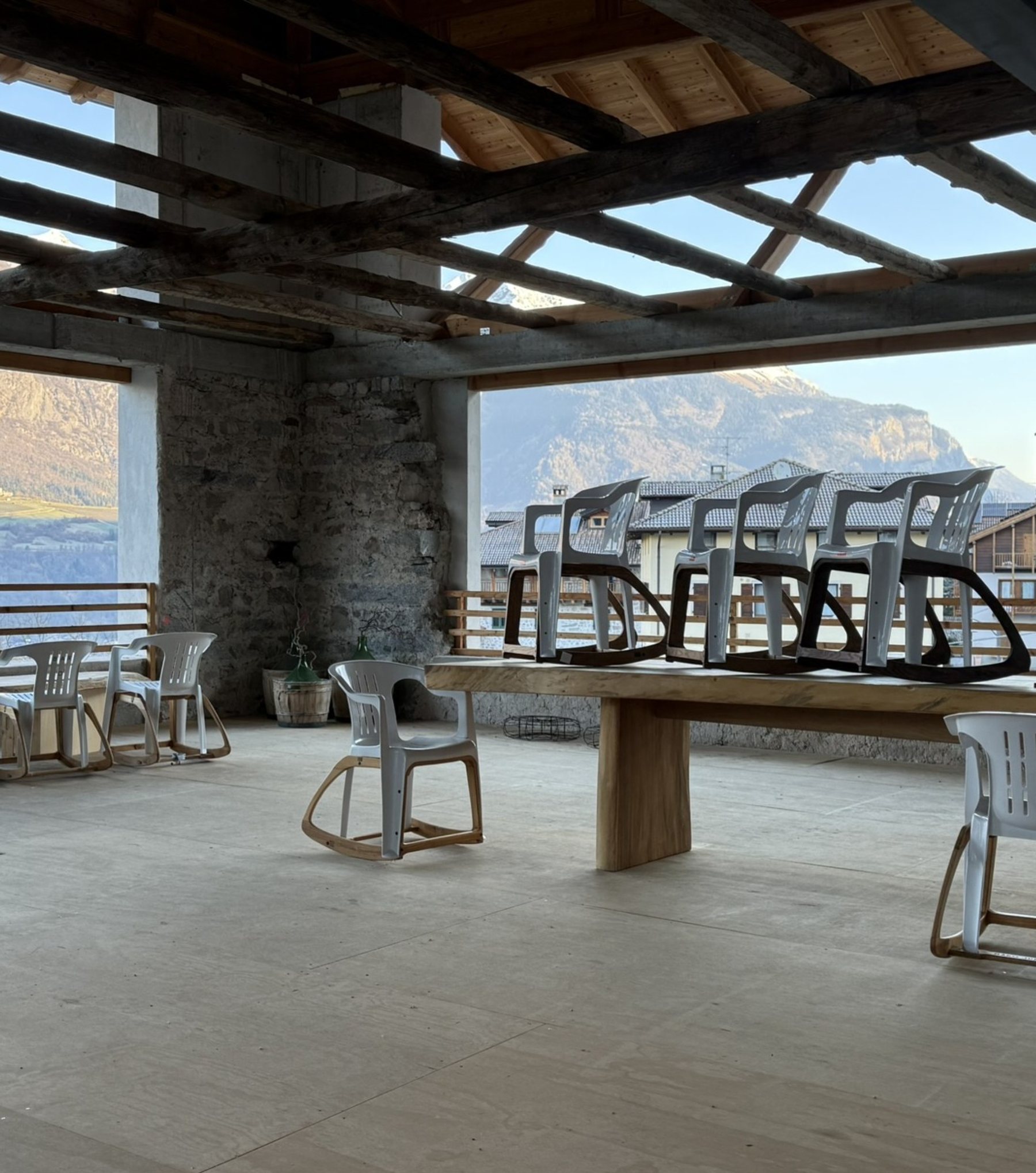
The Trento workshop: a timber-roofed loft with rocking chairs on a long oak table and the Dolomites behind

Trento,Italy.

Our workshop, where the oak meets the monobloc.

Handcrafted in Italy. Built to last.
For In & Out. Come have a seat.
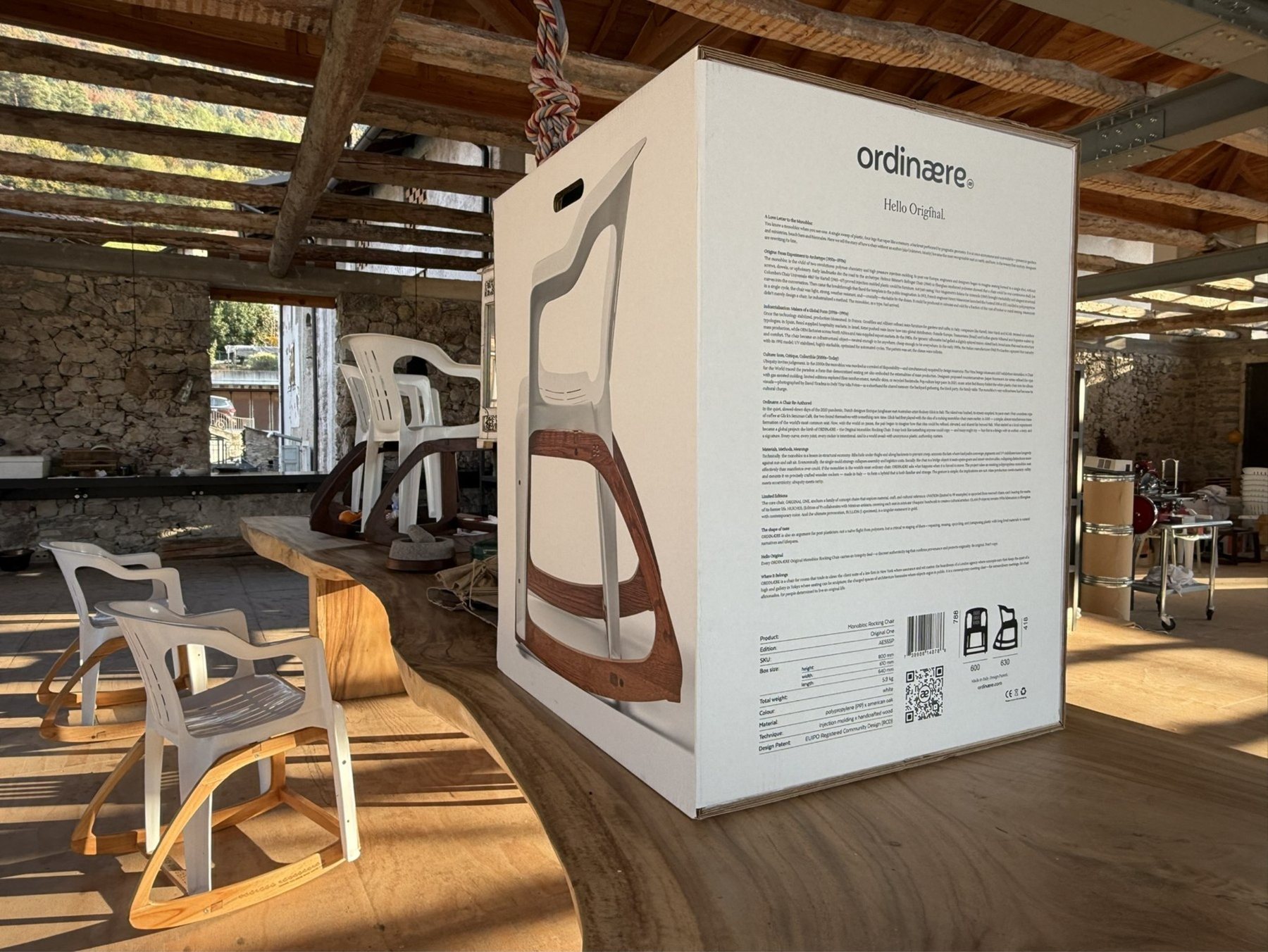
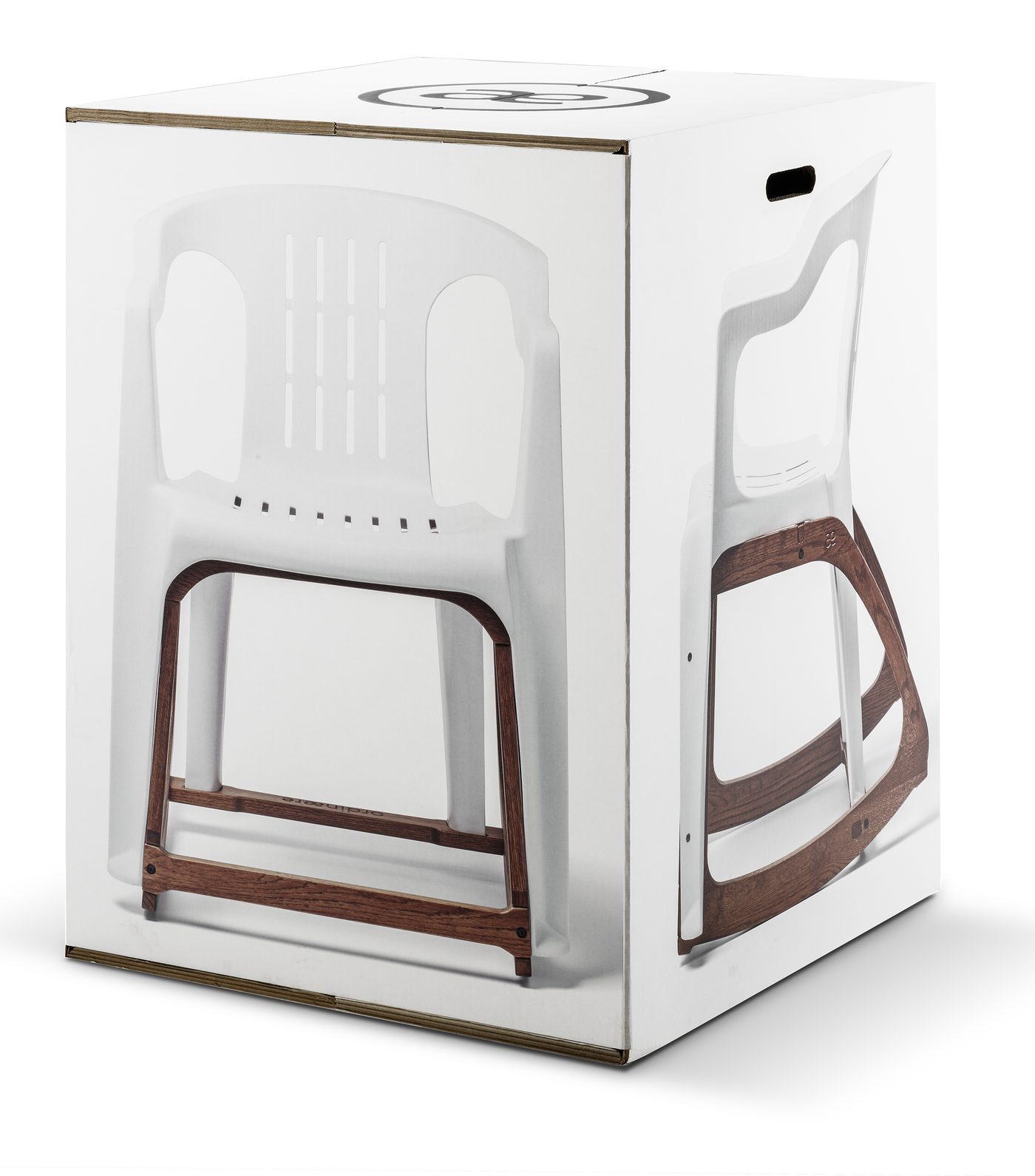
The Monobox: a white box printed with the chair at full size and the love letter, next to two rocking chairs in the workshop

The packaging

The Monoboxfor the monobloc.

The Monobox: a white box printed with the chair at full size

Original One arrives in a box printed with the chair at full size and the whole love letter to the monobloc. Sealed with the æ, it reads less like packaging and more like a plinth. Keep it, show it, put it next to the chair.

Box
800 × 610 × 640 mm
Boxed weight
5.9 kg
Printed with
Chair · love letter · æ
After unboxing
Recycle it, or don't

“The package is not really noticed as a package. More a display.”

Visitor, DDW 2025

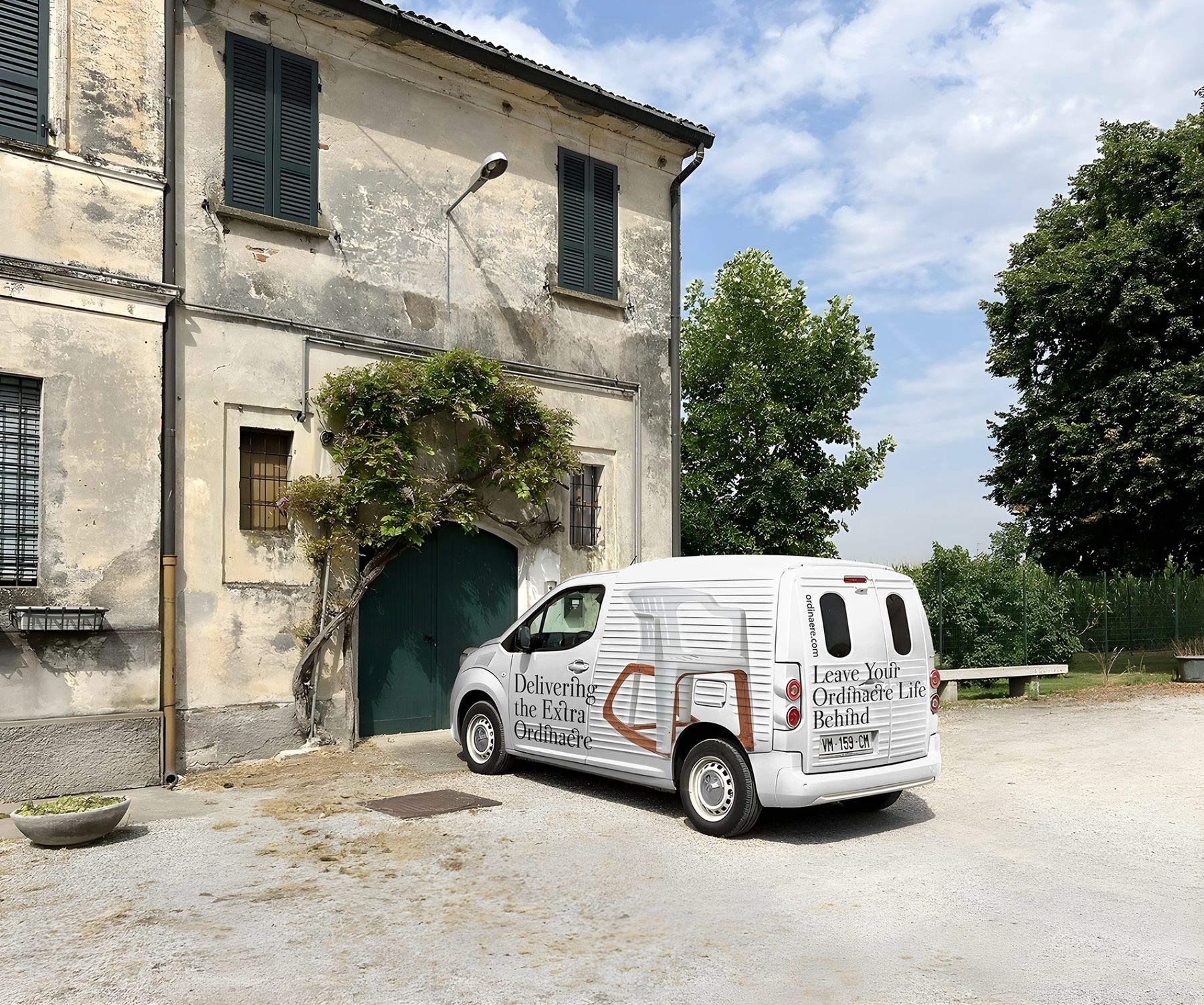
A white ORDINAERE delivery van printed with the chair, parked in front of an old Italian farmhouse

Deliveringthe extra ordinære.

Straight from the workshop to your door.

Leave your ordinære life behind

Ordinary people

ConversationPiece.

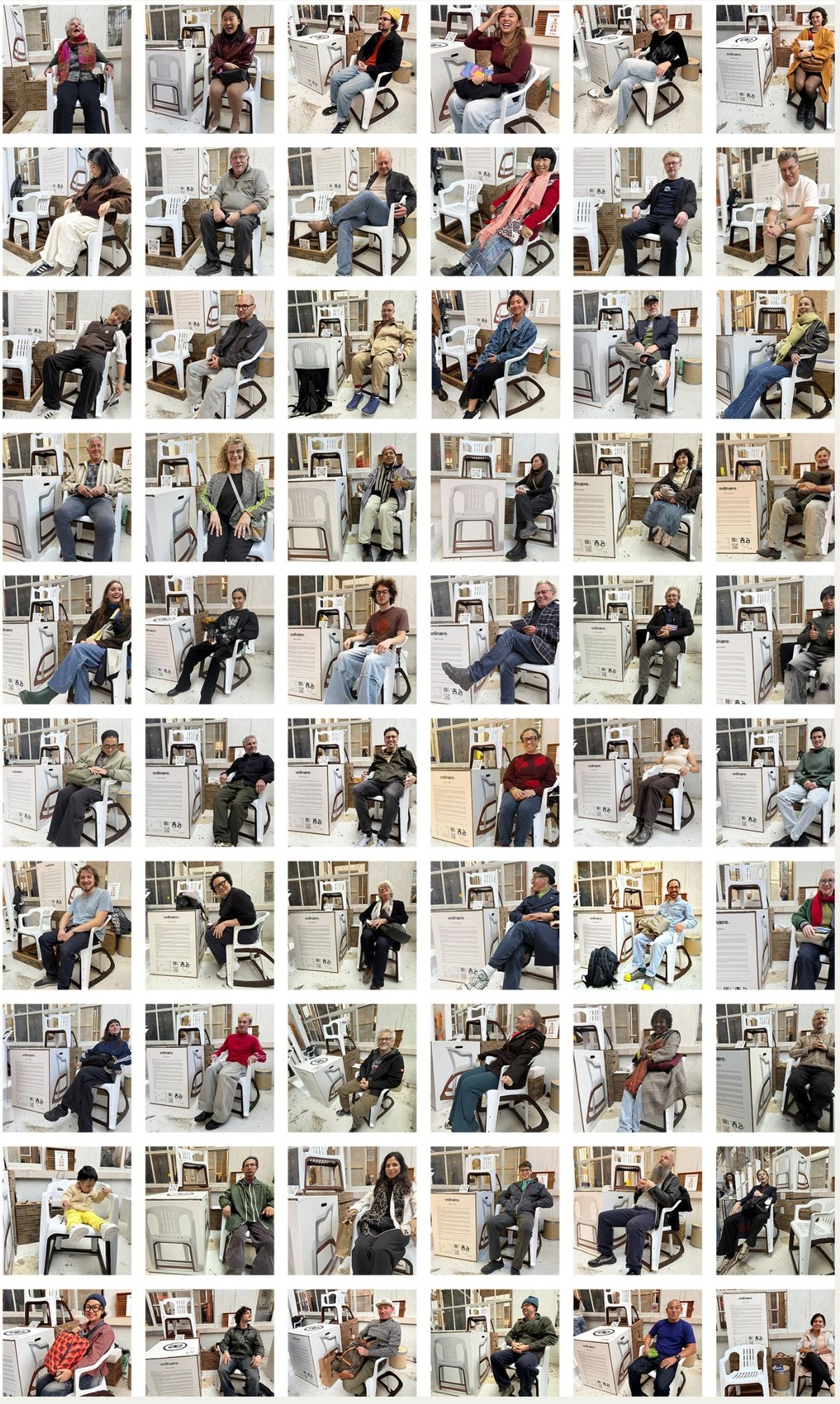
A grid of sixty portraits of visitors sitting on the rocking chair at Dutch Design Week
More than 1,000 strangers during 7 busy days at Piet Hein Eek, Dutch Design Week 2025. Many didn't realise it rocks until they sat down.

Overheard at DDW 2025

“It messes with your brain!”

“Once you sit on it, you have a second opinion.”

“It's an ice breaker!”

“Knap van lelijkheid.”

So ugly it's handsome again

“Me recuerda a mi abuela. Pero la silla es más gruesa.”

It reminds me of my grandmother. But this chair is sturdier

“Es trifft unsere Zeit!”

It captures our times

“This chair certainly puts a spell on you!”

“It looks good, but you sit even better!”

“Es la mítica silla de plástico.”

It's the legendary plastic chair

“This chair breathes luxury.”

“It's a funny take on the plastic chair.”

“Ironisch. Humorvoll.”

Ironic. Full of humour

“This chair makes your soul feel good.”

“You convinced me. It's a really good statement!”

“The monobloc is in the air!”

“You think this will rock?!”

In their words

  • Conversation piece
  • Statement piece
  • Signature piece
  • Designer piece
  • Brain teaser
  • Contradiction
  • Counterintuitive
  • Rebellion
  • Classic
  • Nostalgic
  • Playful
  • Harmonious
  • Versatile
  • Democratic design
  • Forward furniture

Editions

One shape,many stories.

Collaborations are the identity of the chair. The monobloc stays; the material, the maker and the story change.

Original ONE: white monobloc on oak rockers

Original ONE

White polypropylene · oak

Made to order · €995

PRELOVED: a scratched, weathered burgundy monobloc on oak rockers

PRELOVED

Rescued chairs, upcycled with marks and all

Edition of 9

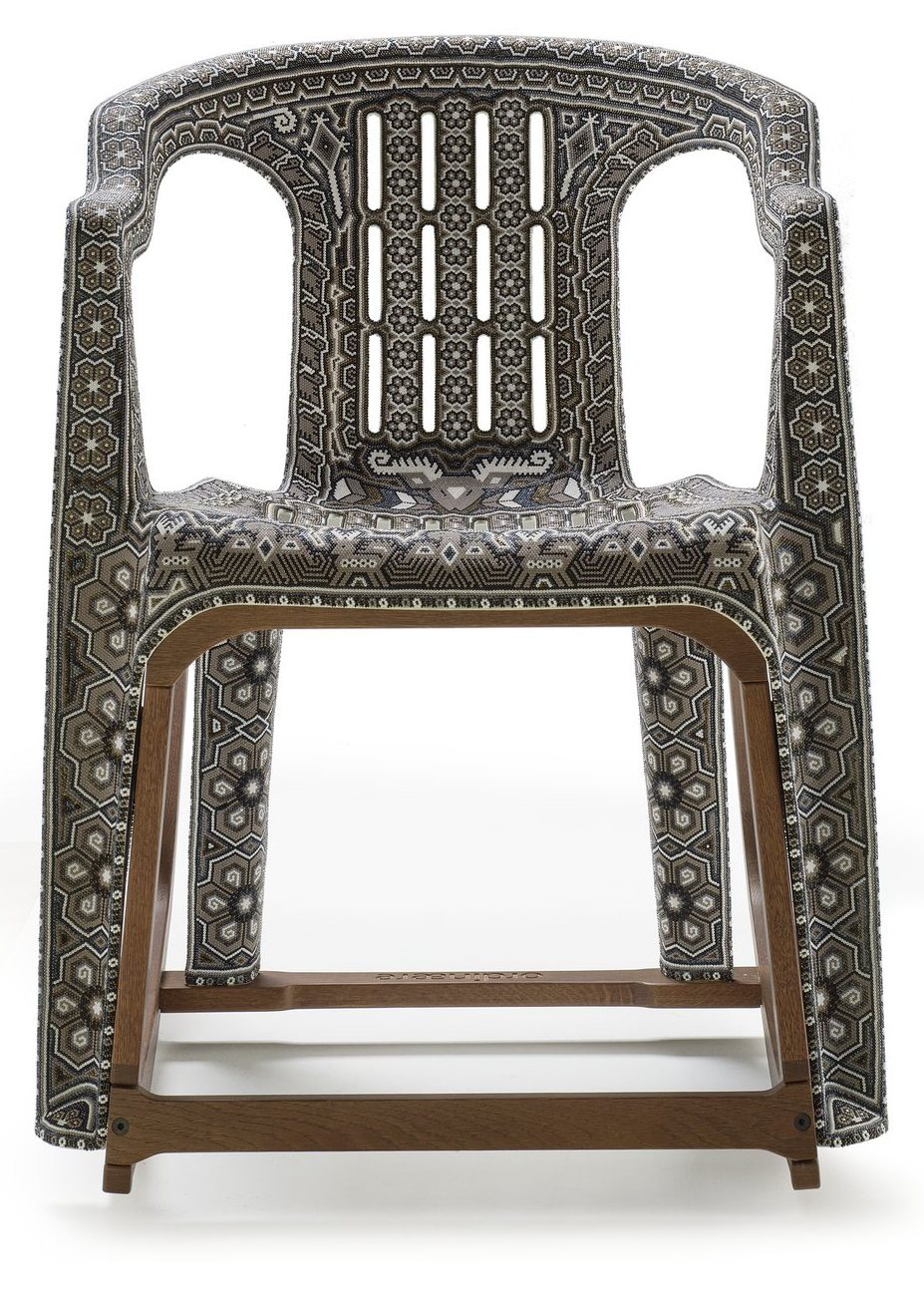
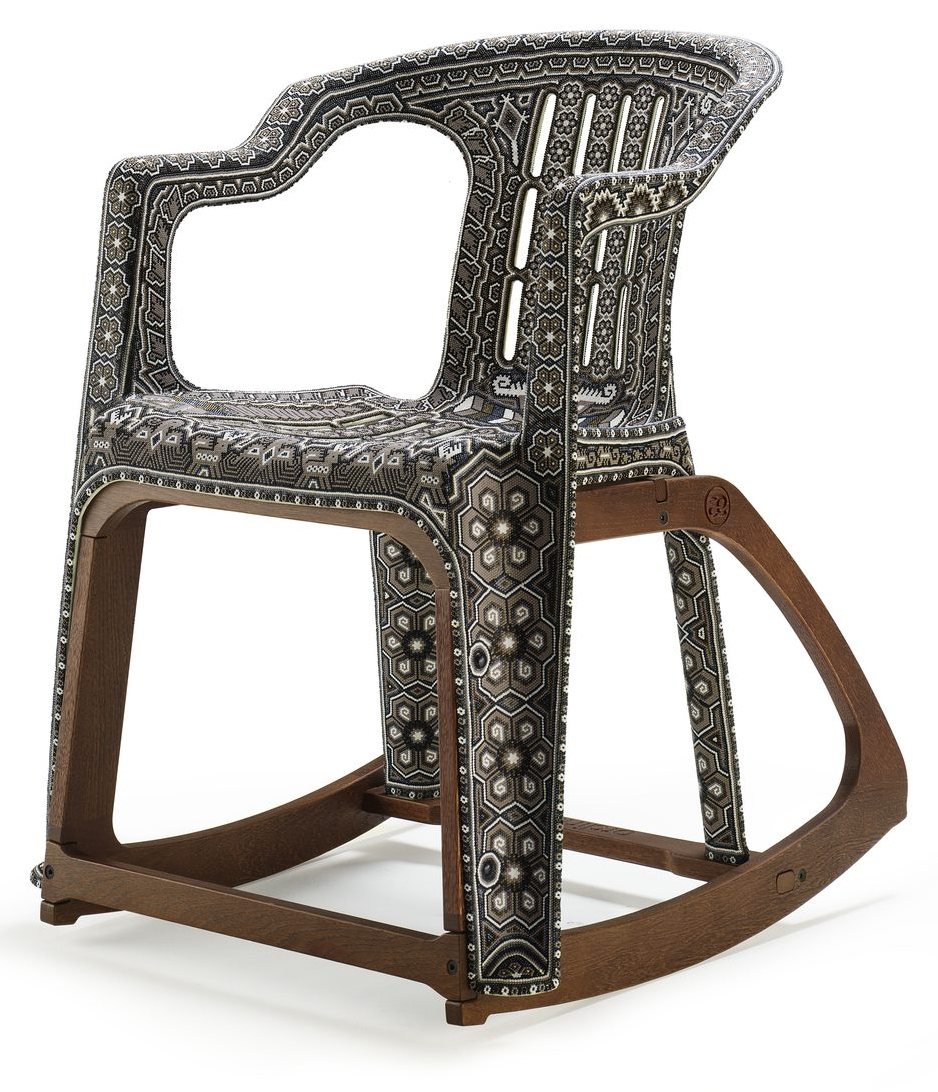
CHAQUIRA: a monobloc covered in black and white glass beadwork on oak rockers

CHAQUIRA

Covered by hand with 100,000+ glass beads

Edition of 9

Your Edition?

Collaborations

Artists, makers, brands

extra@ordinaere.com

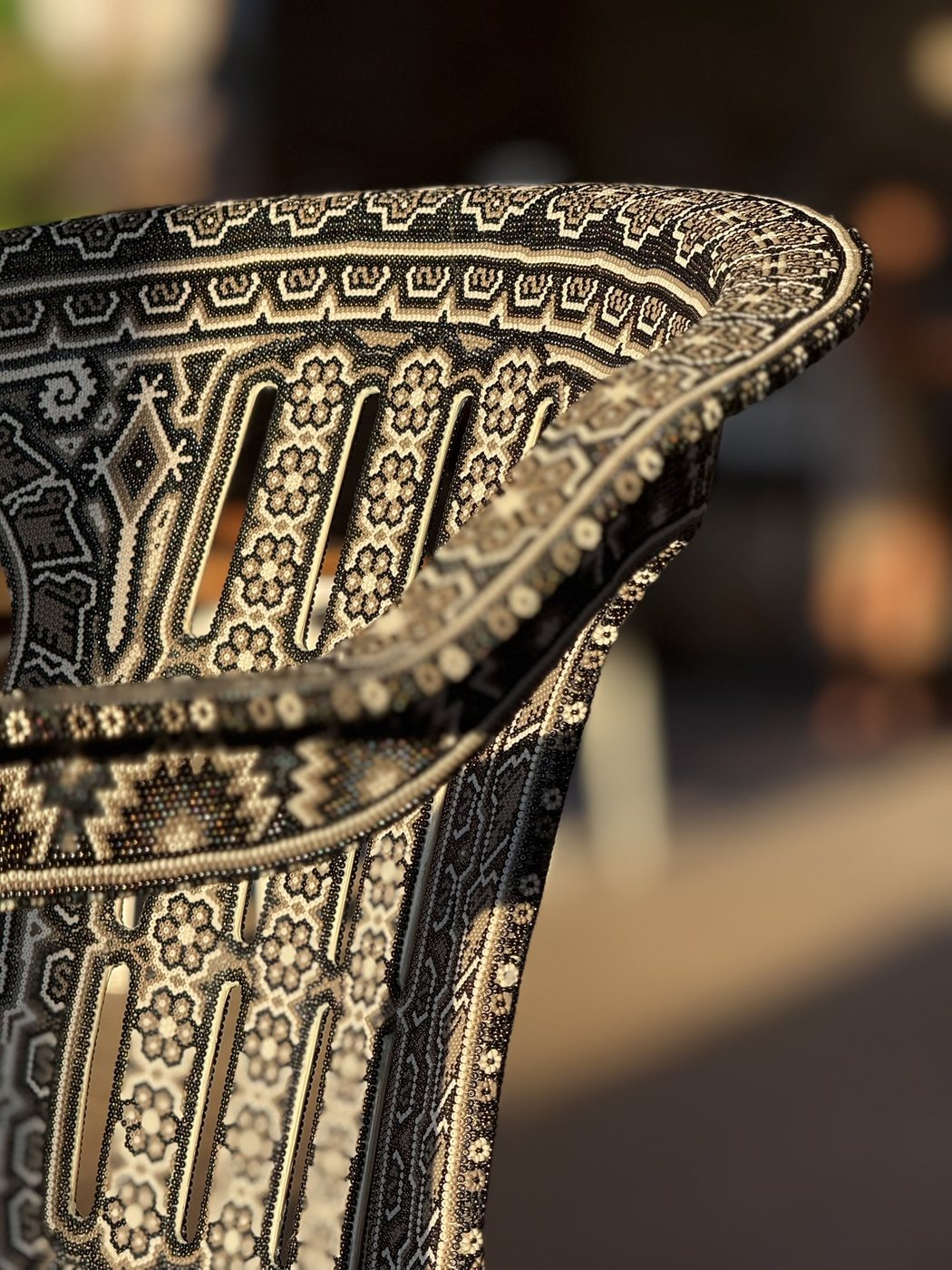
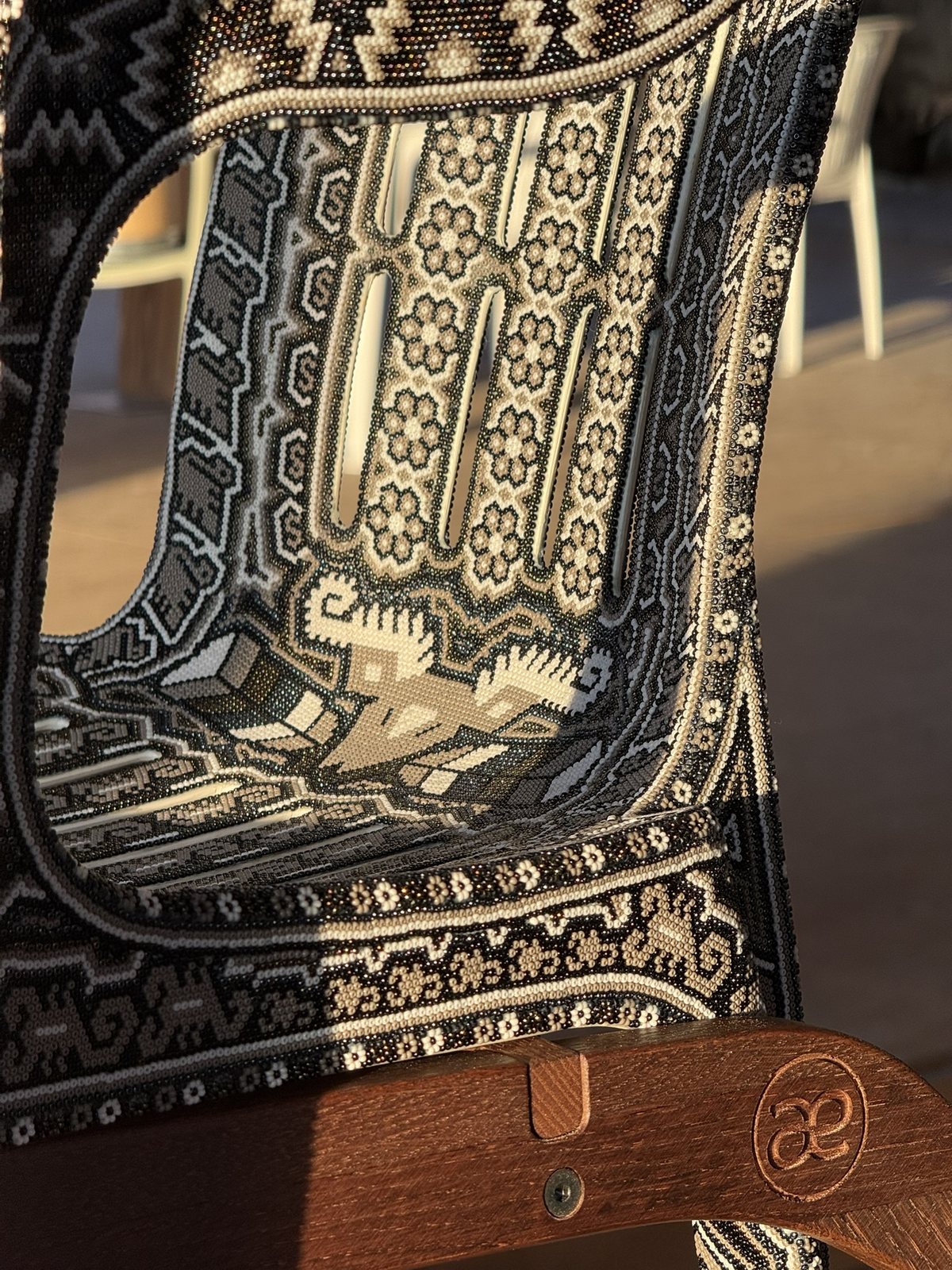
Close-up of the CHAQUIRA backrest and armrest in warm light: black, white and iridescent glass beads in Wixárika flower and step patterns

CHAQUIRAbead by bead.

Edition of 9 · 100,000+ glass beads each

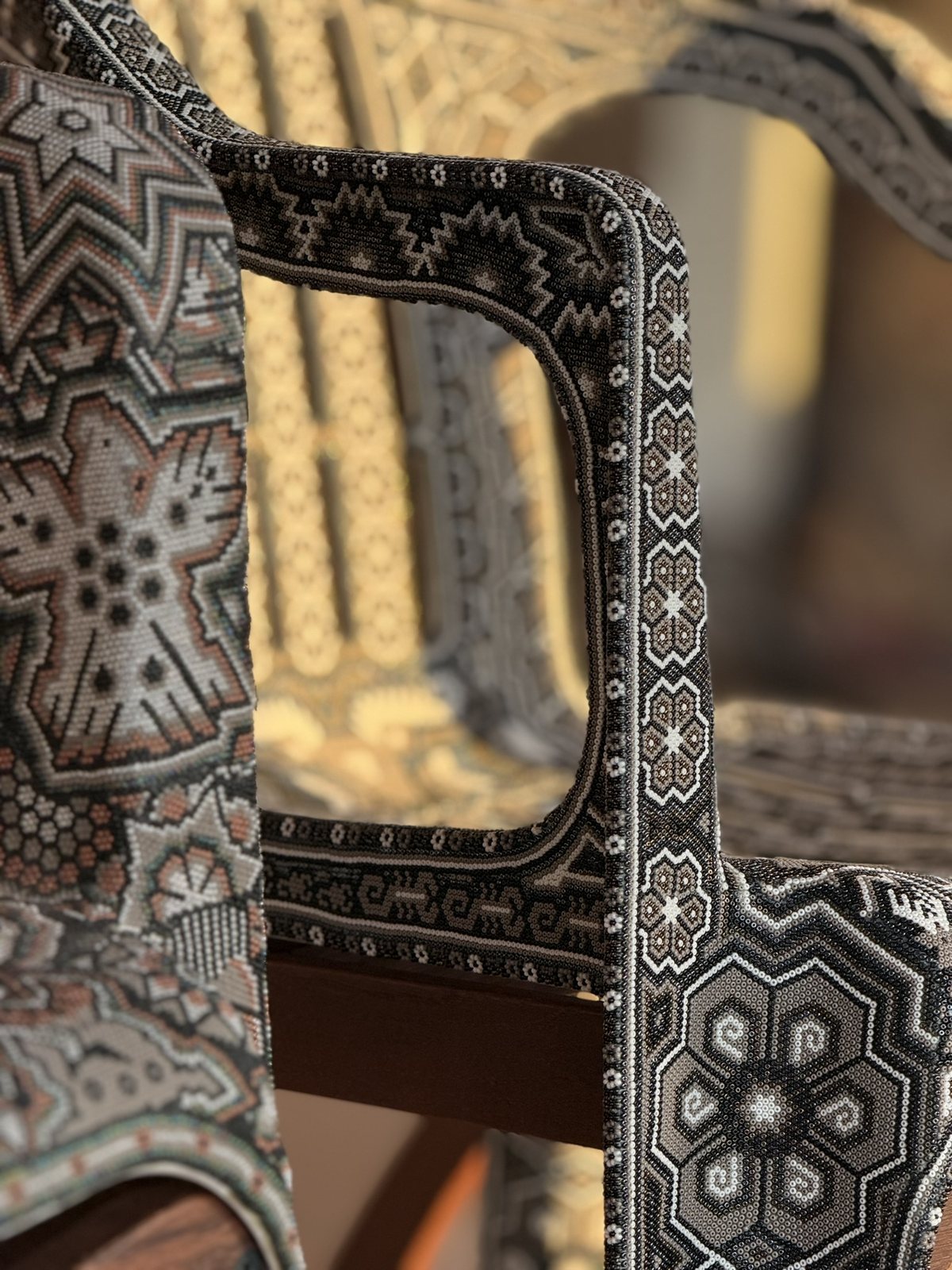
Made with Wixárika artisans in Nayarit, Mexico, each chair is covered in more than 100,000 chaquira beads, inlaid one by one by hand. A cultural artefact to admire, (not to sit in).

Editions made to order · Prices on application

CHAQUIRA from the front
front
CHAQUIRA in three-quarter view
three-quarter
CHAQUIRA from the side
side
CHAQUIRA's beaded seat and backrest in warm sunlight, resting on the oak rocker with its carved æ
Wixárika beadwork meets Trento oak.
The beaded armrest frame of CHAQUIRA, with flower and star patterns in black, white and grey glass beads
More than 100,000 beads, set one by one.

Made to order · 1 of 1

Dream yourOriginal.

Your own monobloc rocking chair, made once, for you. Choose the shell, the wood and the finish, tell us the rest, and we'll build it in Trento.

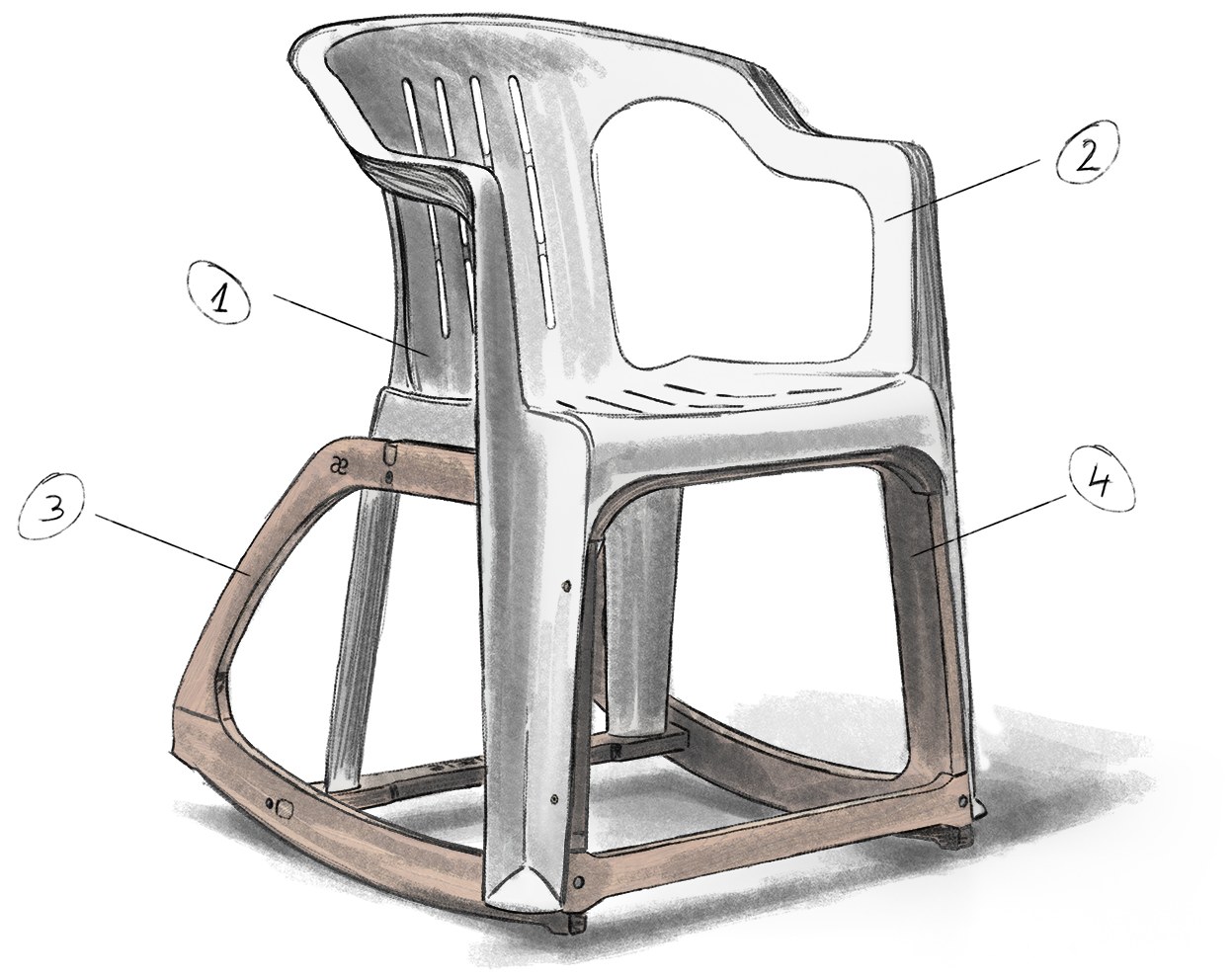
Pencil sketch of the rocking chair with four numbered parts: 1 the shell, 2 its finish, 3 the oak rocker, 4 the stain
Four parts. One chair. Yours.
1The shell
2Its skin
3The rocker wood

American oak is our standard. Other woods on request.

4The stain
Tell us the rest

Made to order in Trento · Price on application

Accessories

Sit softer.Say it louder.

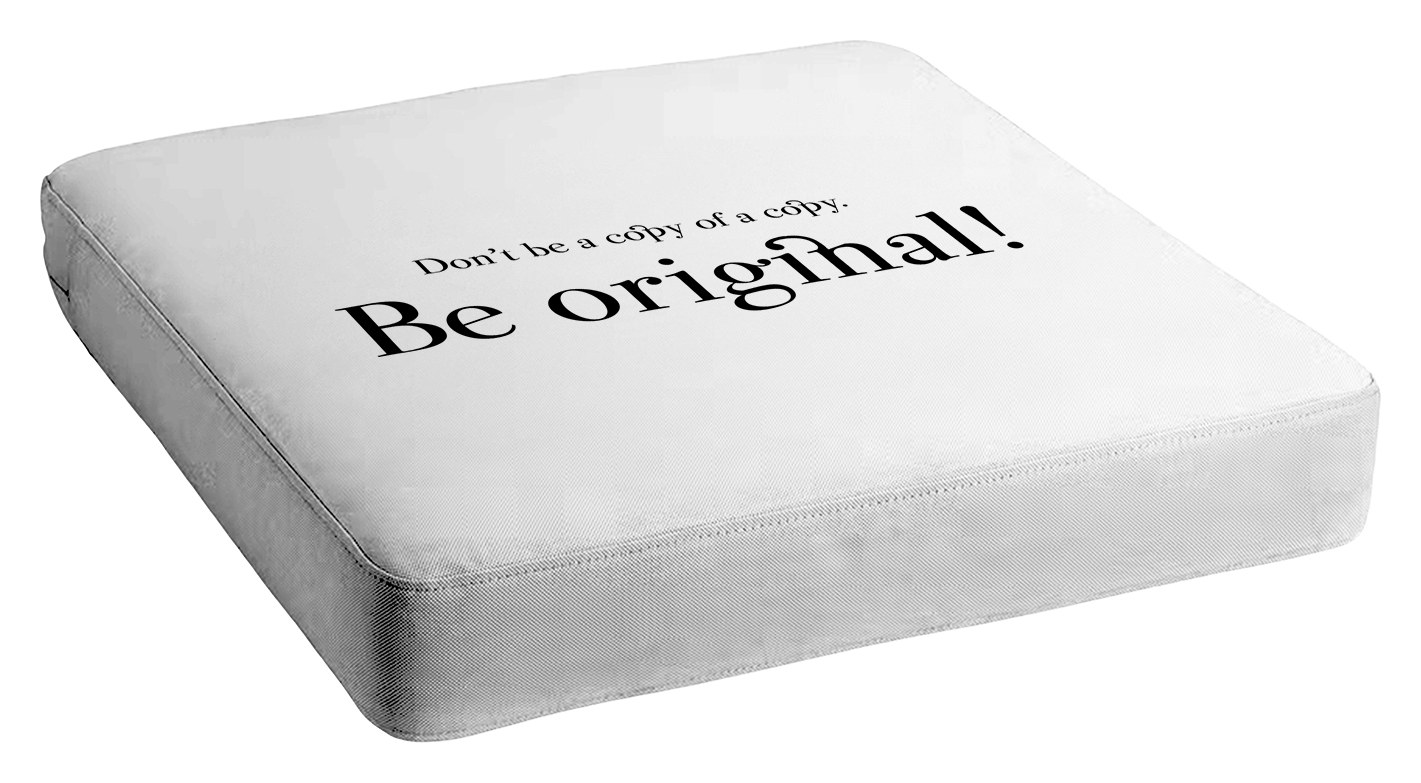
A square white seat cushion printed with: Don't be a copy of a copy. Be original!

Seat cushion

Be original!

A square seat cushion for Original One, made to fit the monobloc's seat. Printed in our own letters with the line every copy should hear: Don't be a copy of a copy.

€99Incl. VAT

Where it belongs

A chair for roomsthat trade in ideas.

London

The boardroom of an agency, where concepts earn their keep.

New York

The client suite of a law firm, where assurance and wit matter.

Tokyo

The quiet of a gallery, where seating can be sculpture.

Your home

The corner where the best conversations happen.

The æ seal carved into the oak rocker
Provenance you can touch.
The Integrity Plate: a black plate reading Original One, Design Rodney Glick and Enrique Jungbauer, number 001
The Integrity Plate: riveted, numbered, signed.
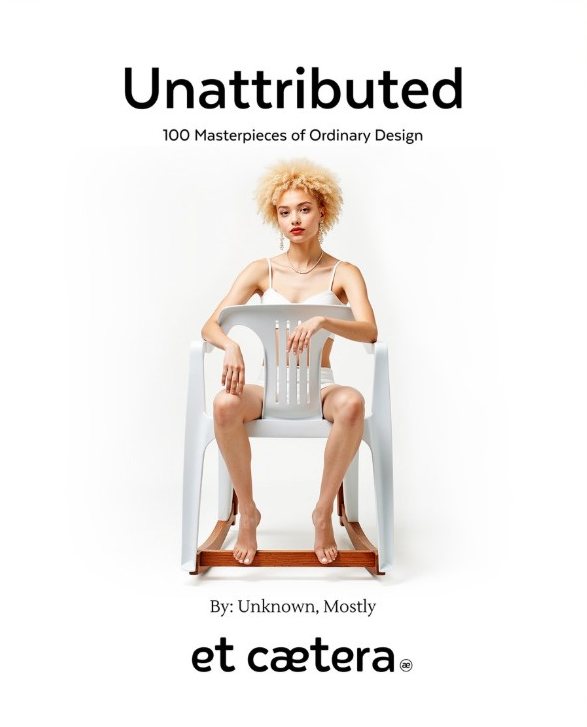
Cover of the book Unattributed: 100 Masterpieces of Ordinary Design, published by et cætera

Coming soon · An et cætera book

Unattributed

100 Masterpieces of Ordinary Design. By: Unknown, Mostly.

A field guide to the autochthonous monoblocs that mushroomed around the world: local moulds, nameless makers, regional quirks. The chair nobody signed, celebrated by the chair that finally was.

Ordinary people

The chairs we didn't make,everywhere.

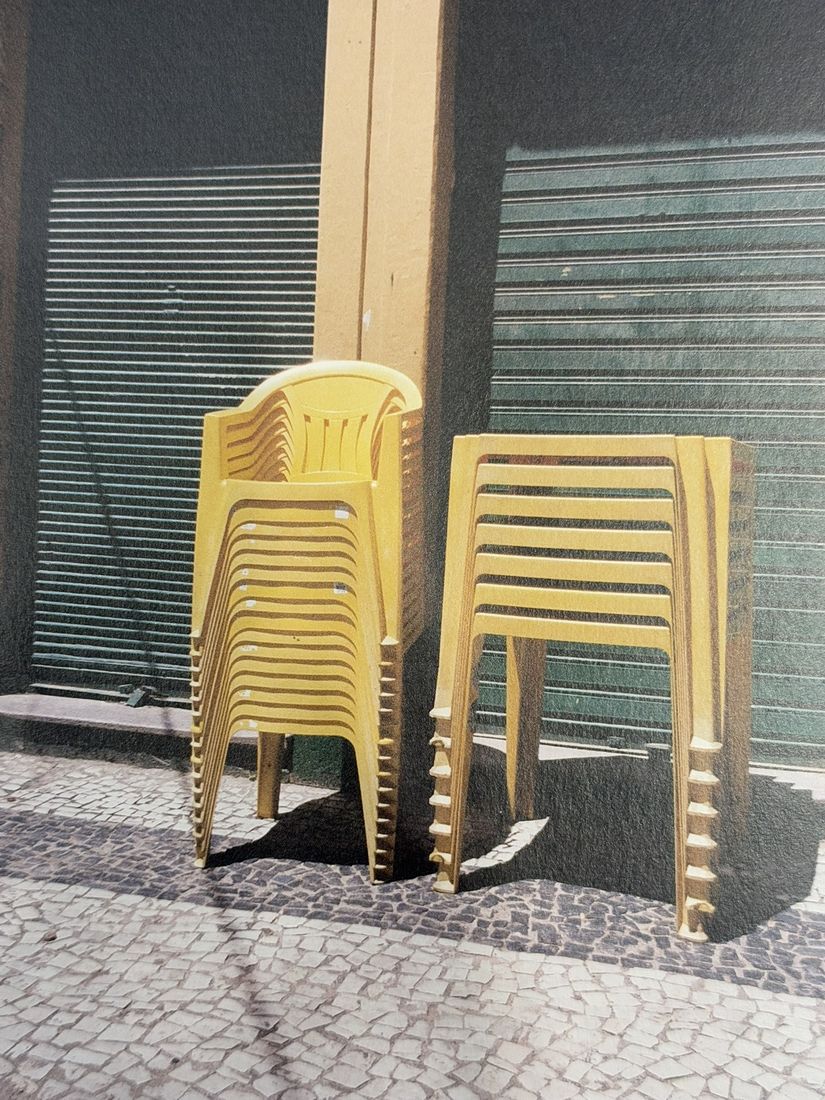
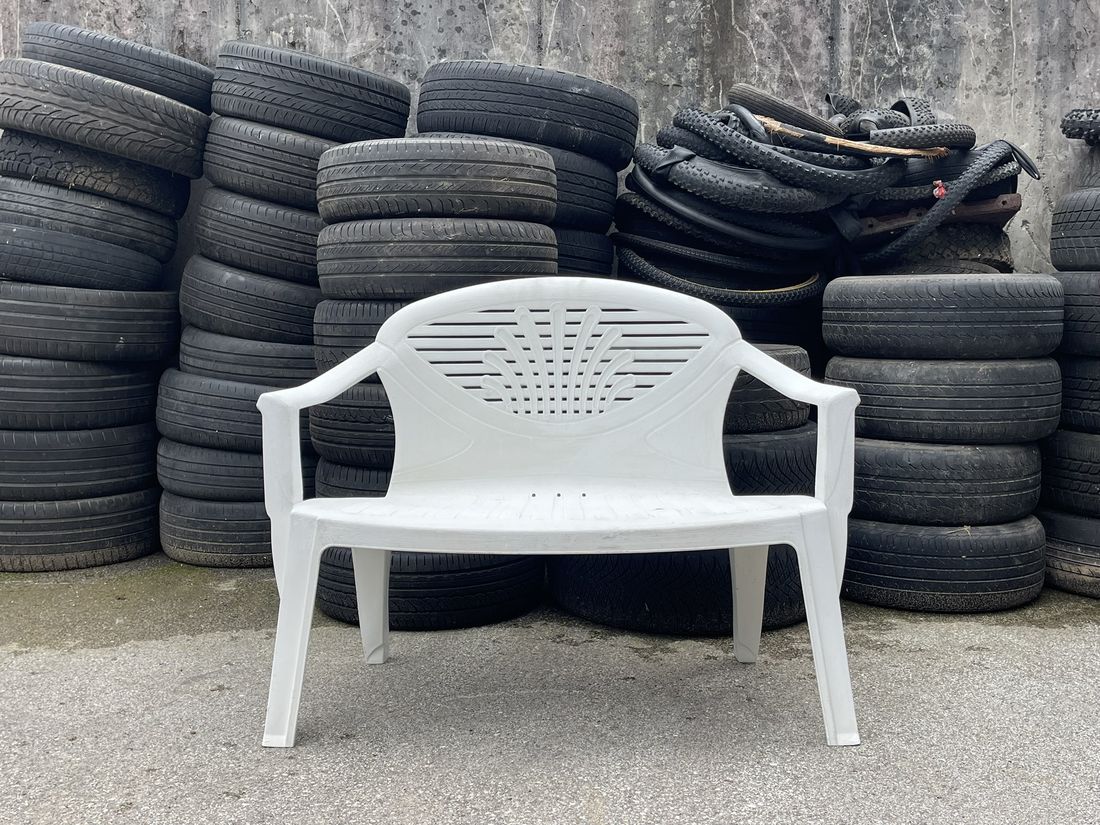
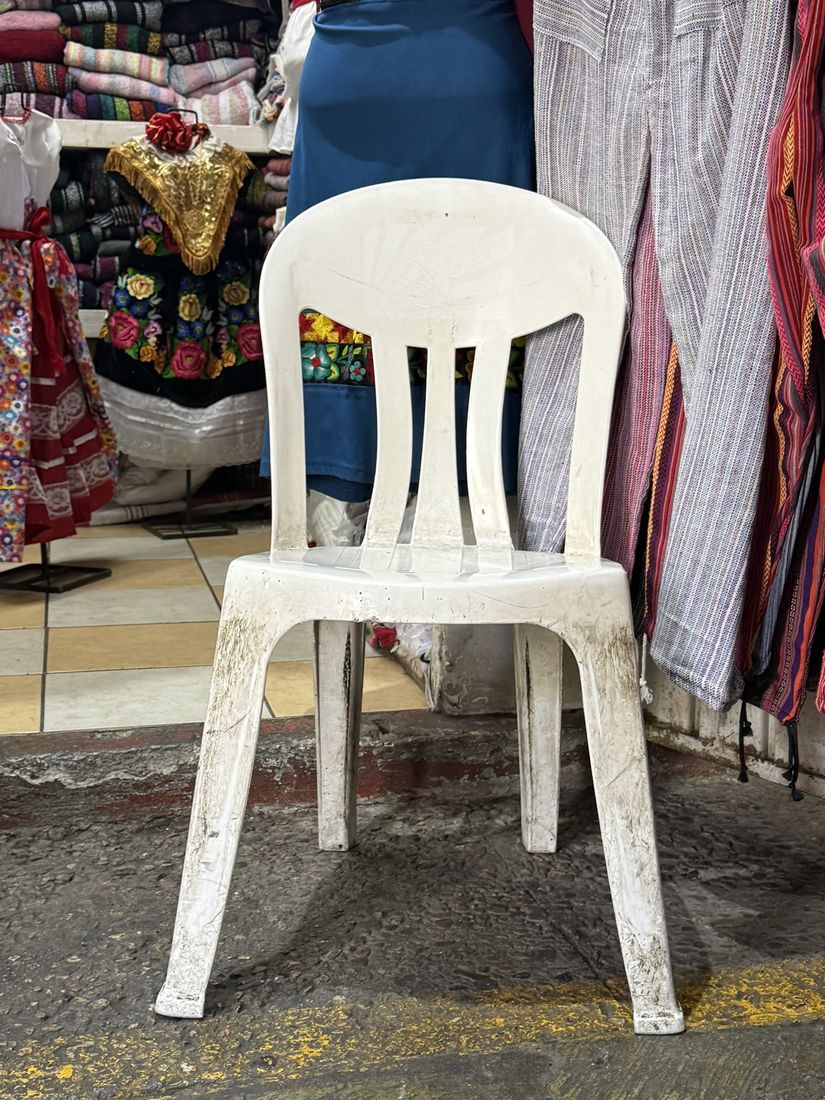
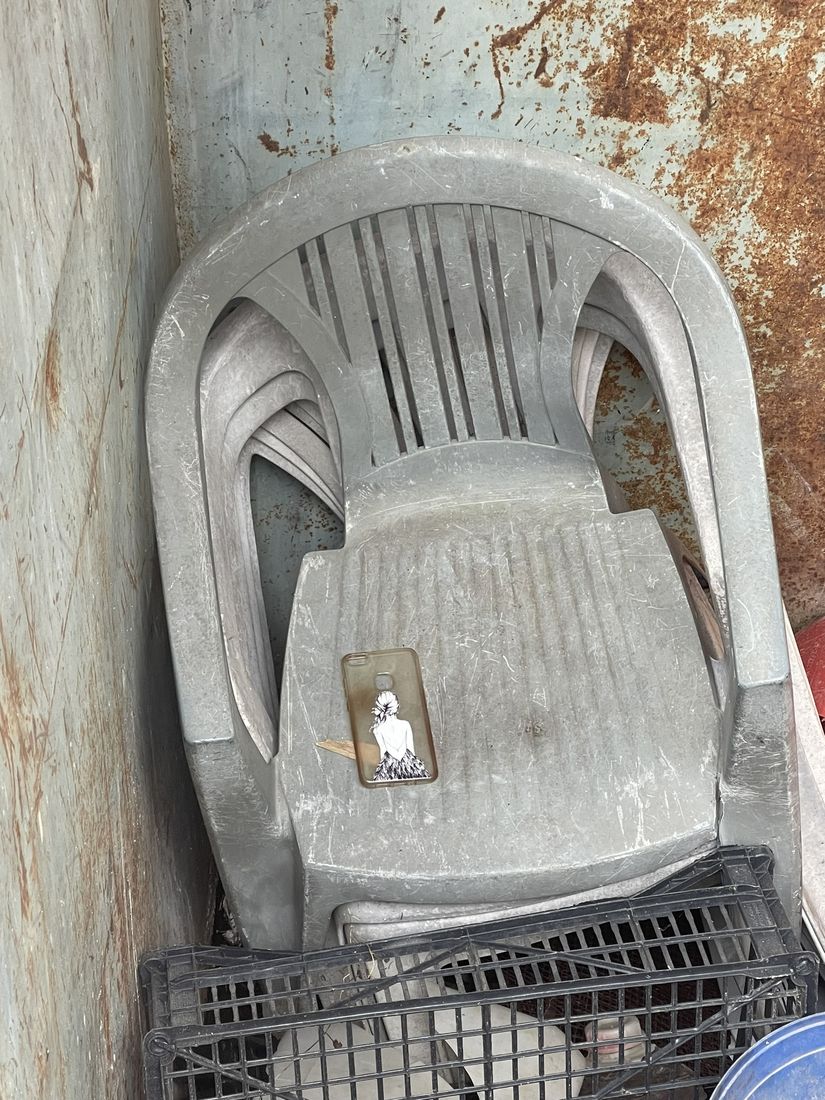
On Instagram we collect the plastic chair where it really lives: on balconies and pavements, in street cafés, stacked for the party. Unsigned, faded, repaired, loved.

@ordinaere.officialordinære · The Original Monobloc Rocking Chair

Ordinary chairs, found around the world. Thanks for sending them in.

Follow
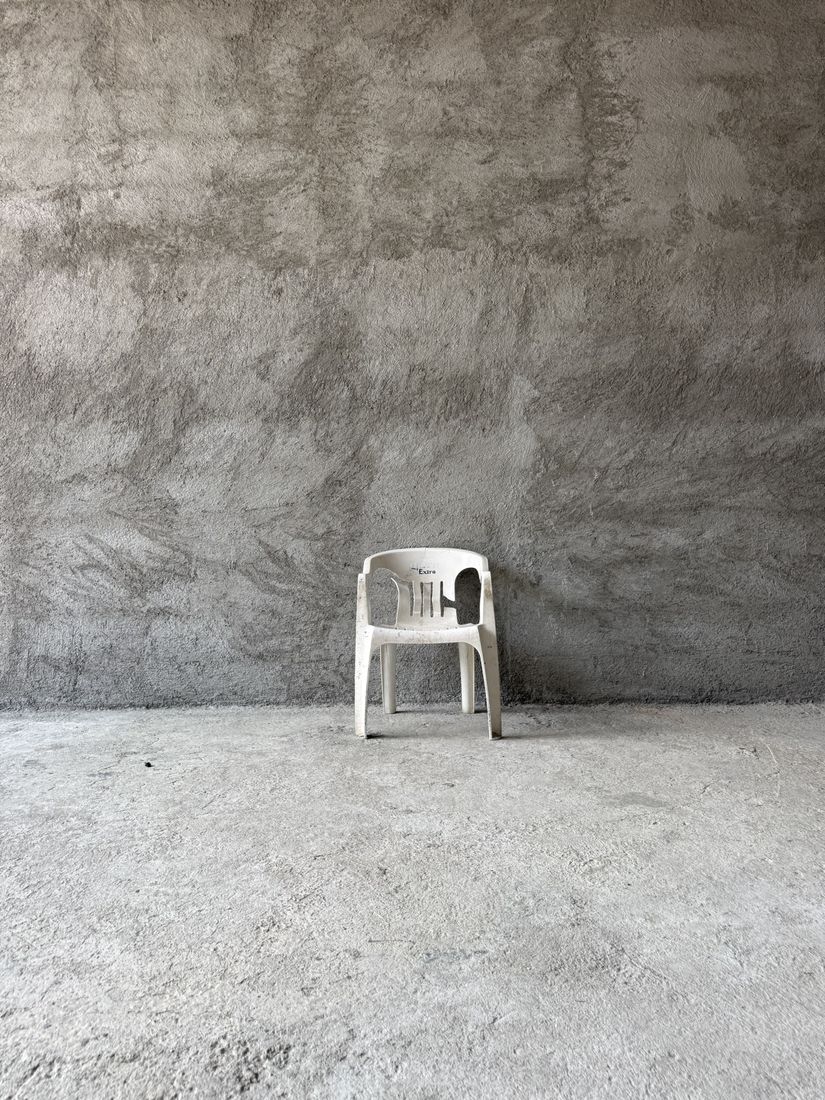
A lone white monobloc with the word Extra on its back, against a rough plaster wall
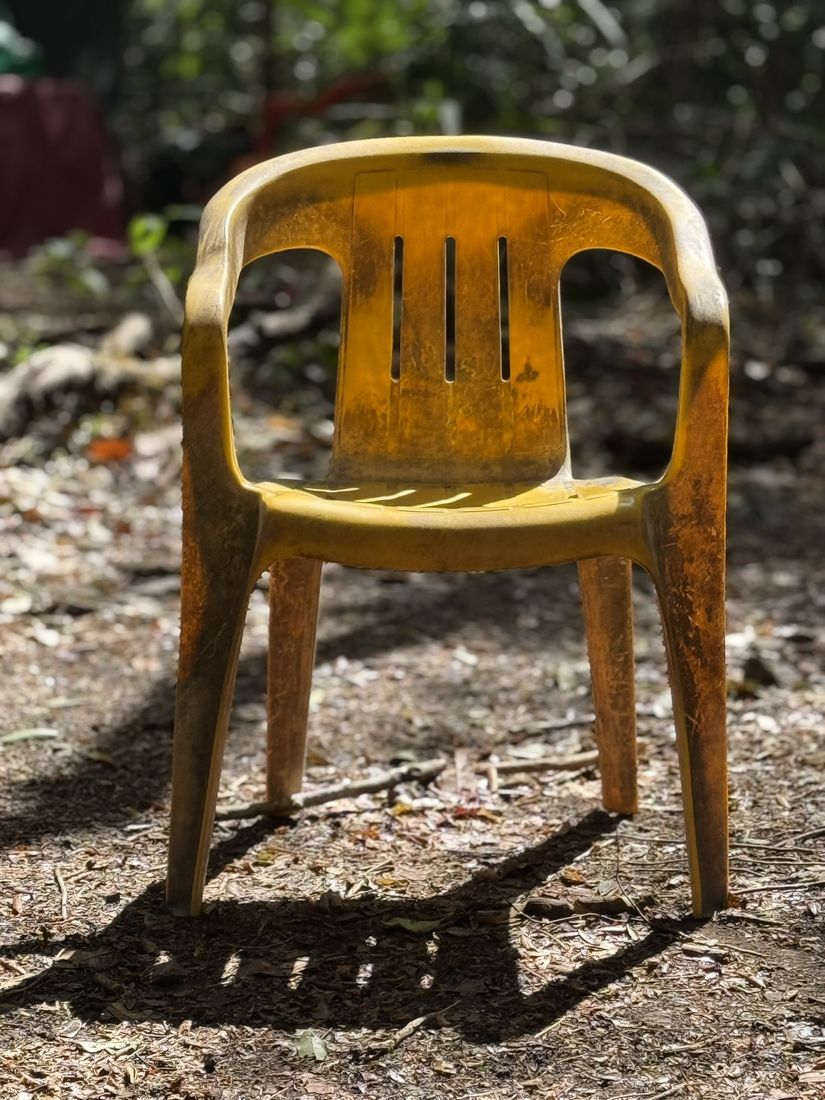
A sun-faded yellow armchair on a forest path
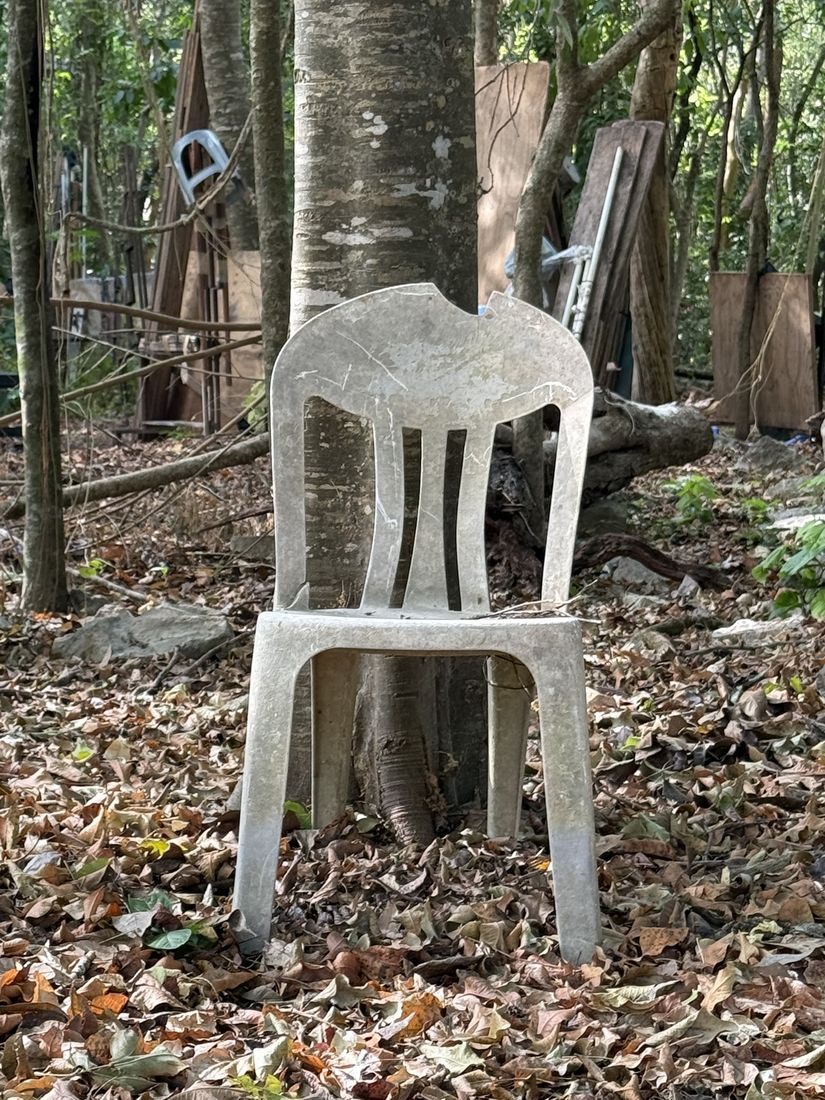
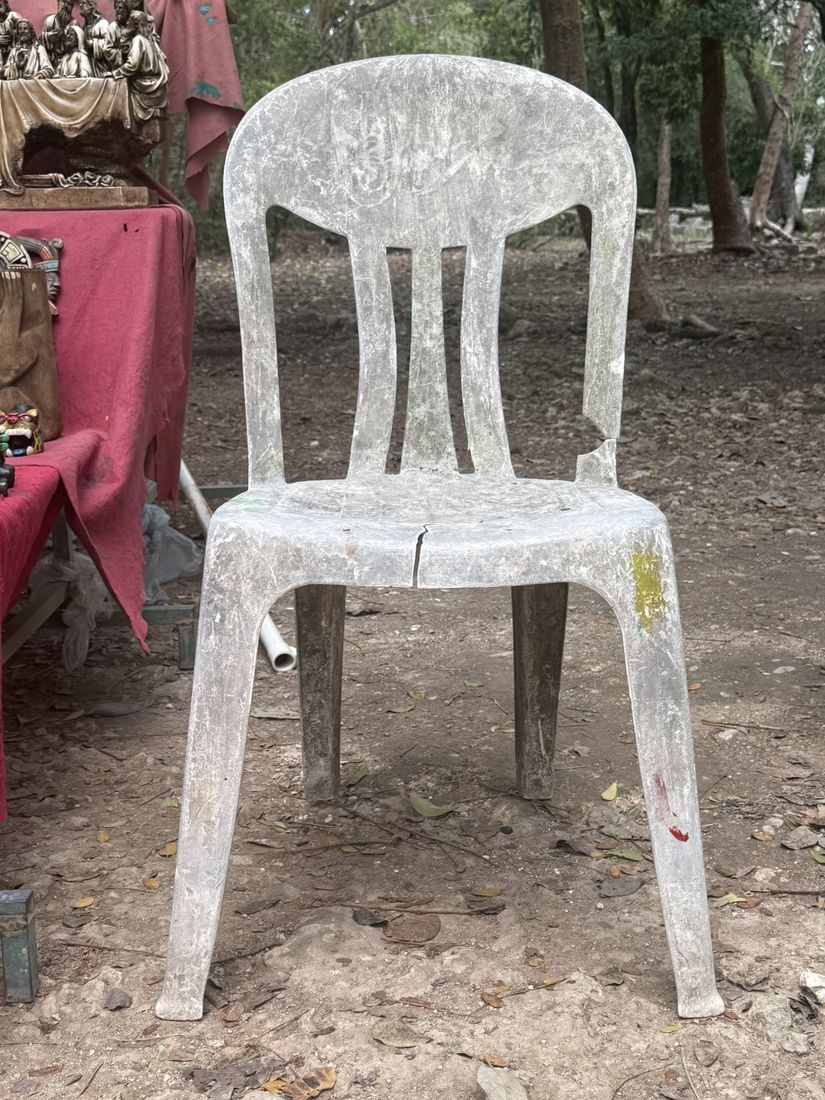
A weathered grey side chair with a broken back, among fallen leaves
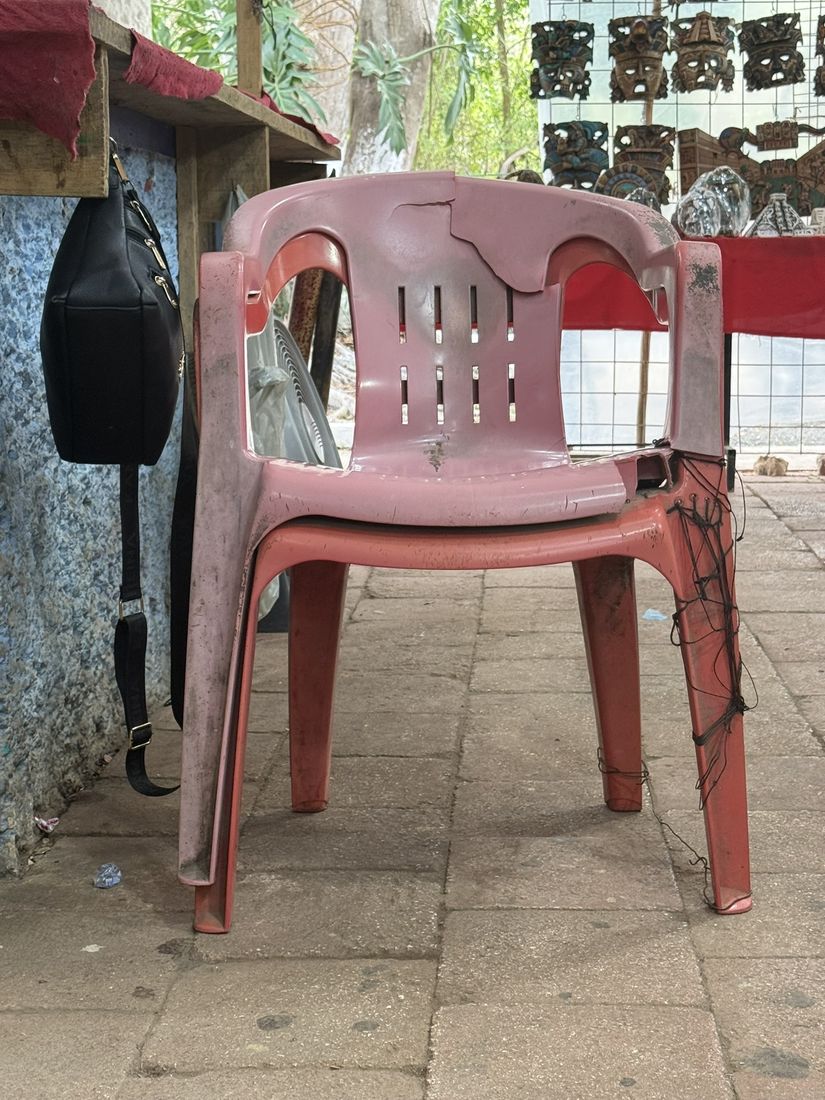
A pink armchair stacked on a red one, its cracked leg tied up with string
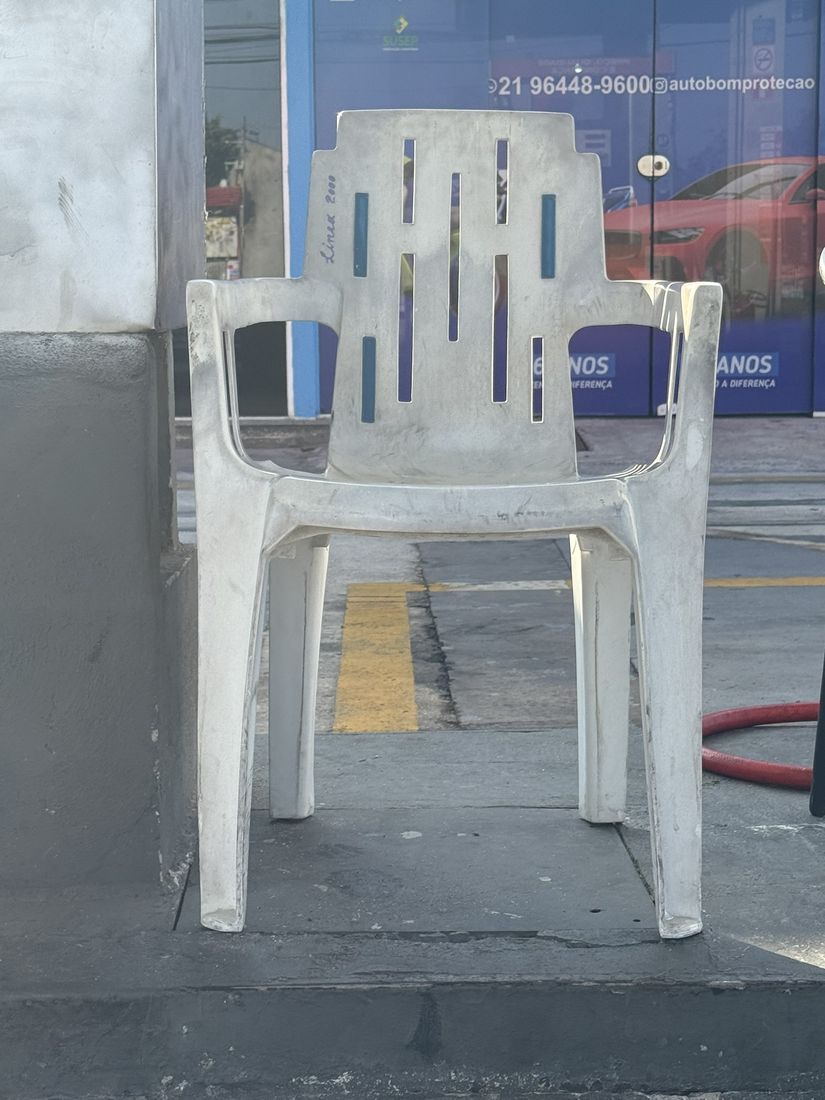
A white Linea 2000 armchair with blue inserts on a petrol-station forecourt
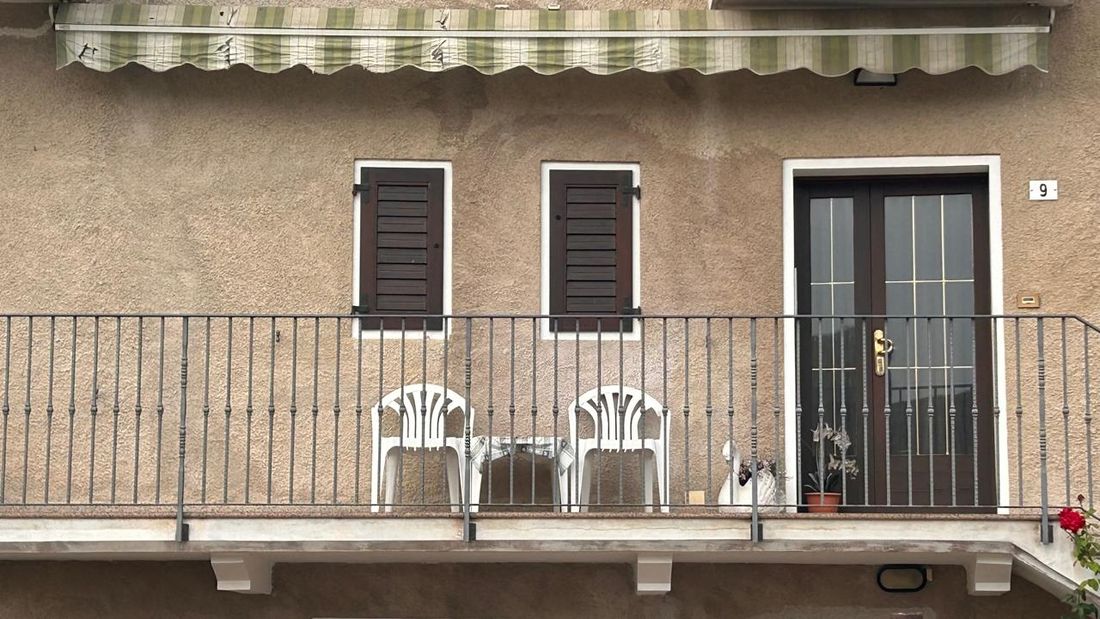
Two white chairs and a small table on a balcony behind iron railings
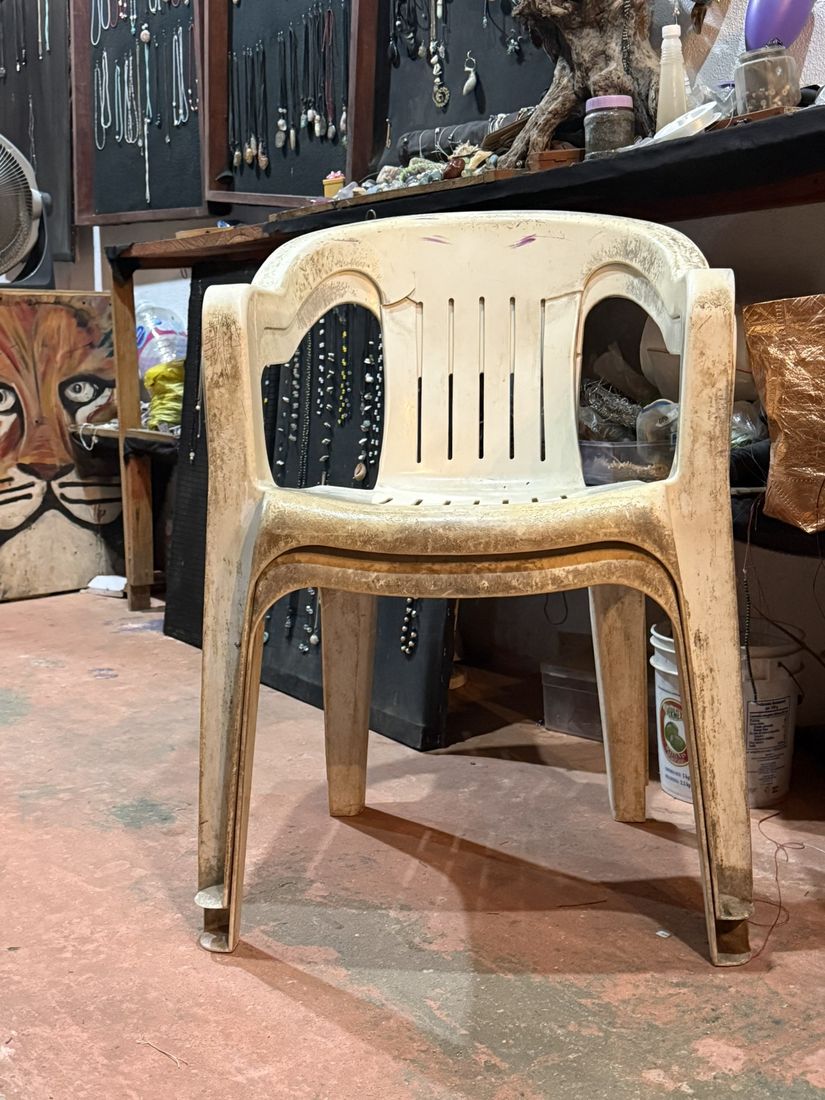
Two cream armchairs stacked in a jewellery workshop
A grey side chair, cracked across the seat, beside a market stall
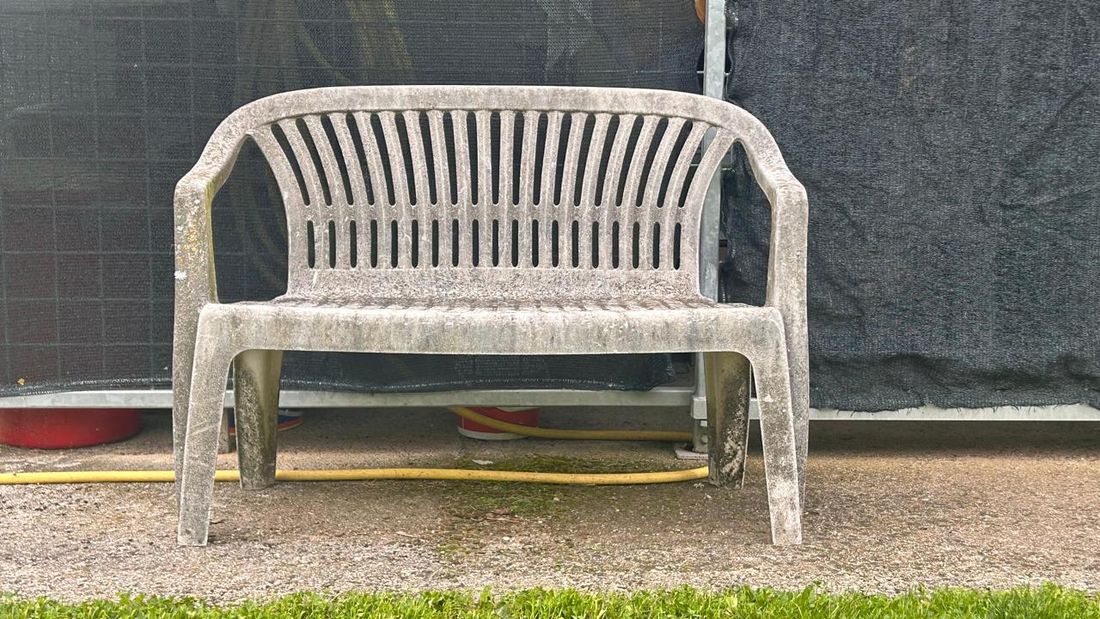
A two-seater plastic bench, grey with moss and age
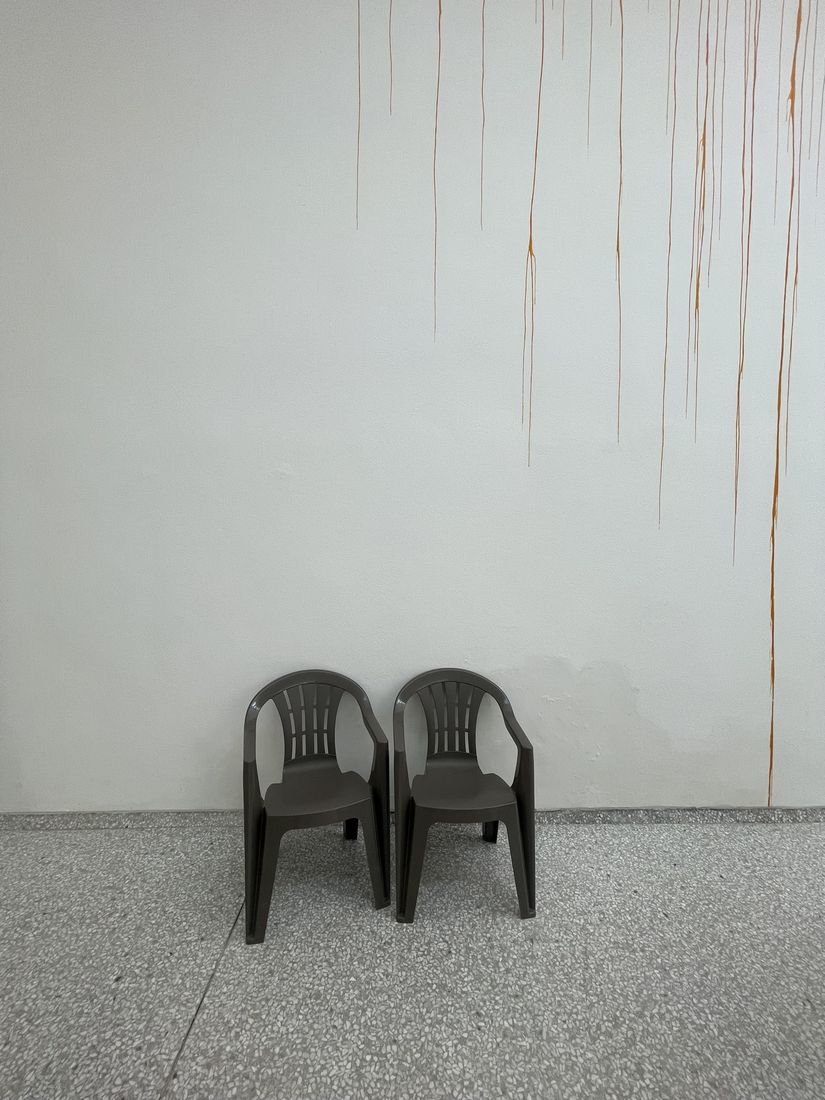
Two dark grey armchairs against a white wall with orange paint drips
Two stacks of yellow chairs in front of a shuttered shop
A white two-seater bench in front of piles of old tyres
A white side chair in a market among embroidered dresses and woven cloth
Grey stacked armchairs in a rusty corner, a phone case left on the seat

Spotted an ordinary chair? Snap it, tag us, send it in.

instagram.com/ordinaere.official

Kindred spirits

We are not alonein loving it.

Around the world, other makers have fallen for the same anonymous chair and given it a second life of their own. We keep finding them, and we keep meeting them.

Guy Debord had a word for it: détournement. Take the most ordinary thing the world mass-produces and turn it, until it says something it was never meant to say. Every maker here has done it to the same anonymous chair.

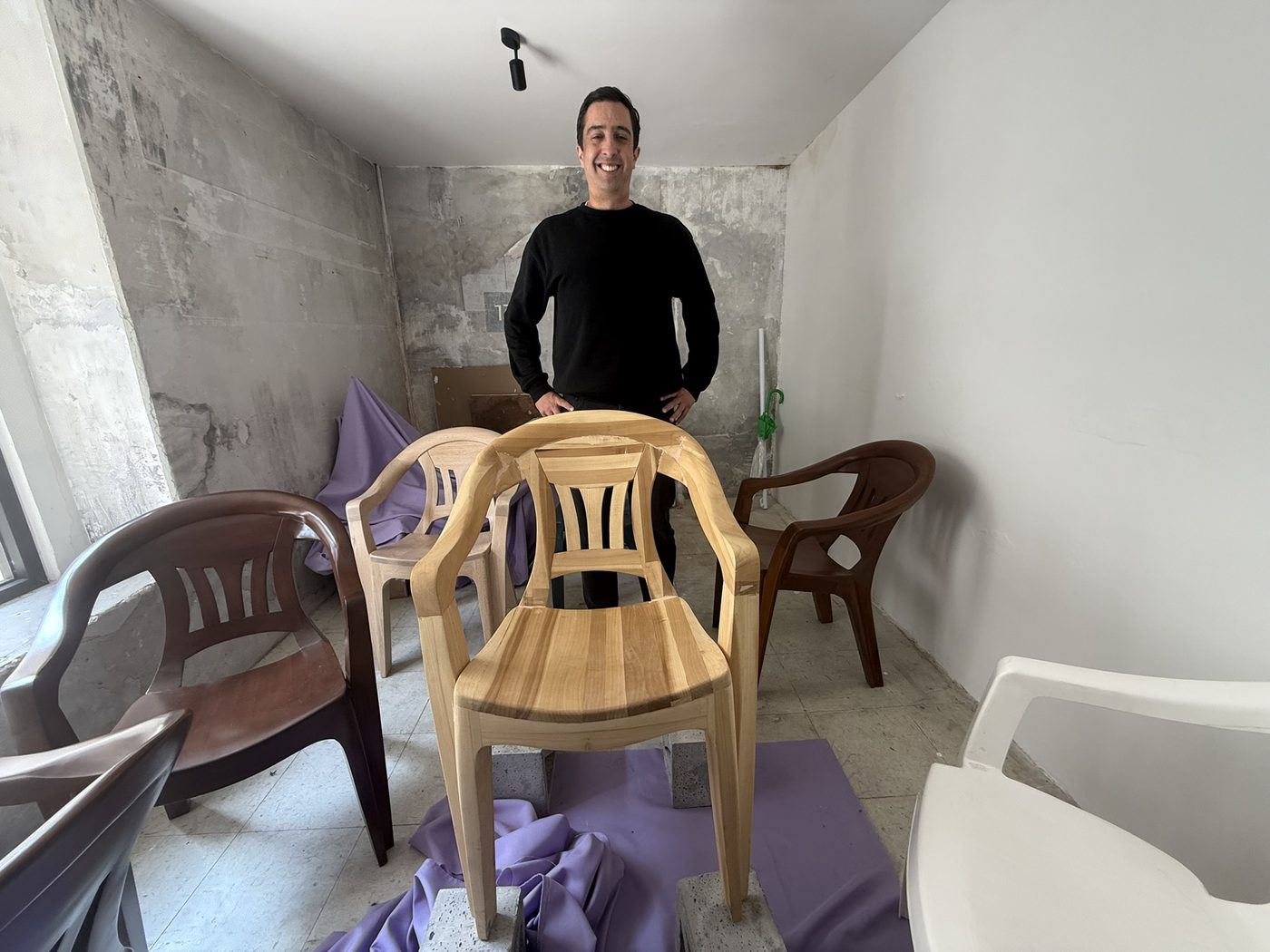
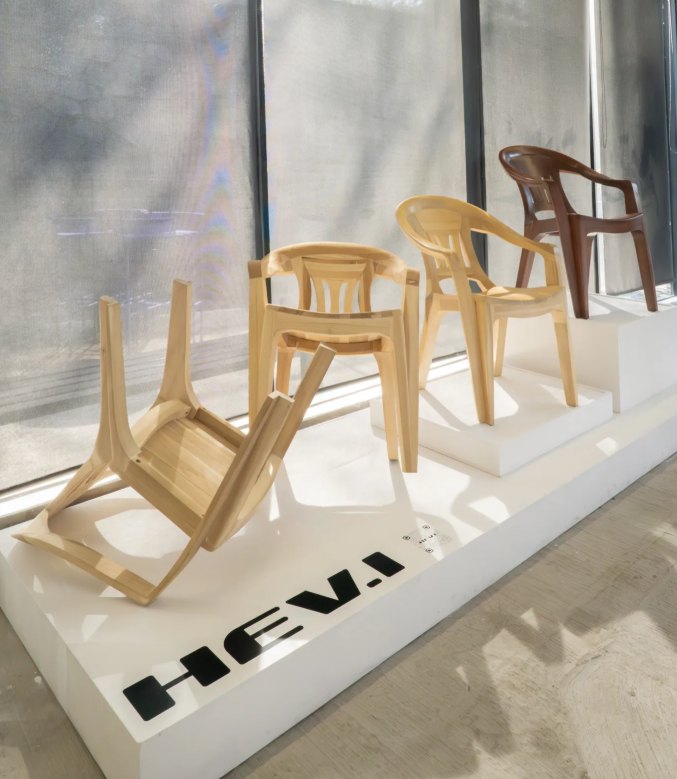
Vicente of HEV.I in his Mexico City studio behind a monobloc armchair made in solid wood, surrounded by plastic monoblocs HEV.I's wooden monobloc chairs on a white plinth printed with the HEV.I name

Mexico City · Mexico

HEV.I

Vicente takes the plastic monobloc back to wood. Every curve, slot and splayed leg of the familiar silhouette, rebuilt by hand in solid timber.

hevi.mx ↗
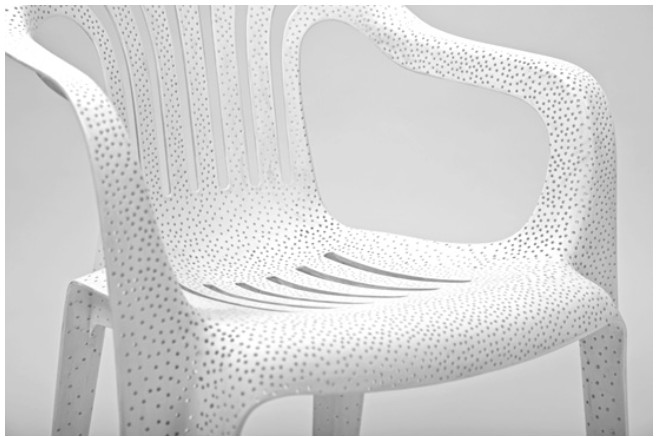
A white monobloc armchair from Tina Roeder's White Billion Chairs, its whole surface pierced with thousands of small holes

Berlin · Germany

Tina Roeder

White Billion Chairs, 2009. Thirty-three old and rare monoblocs, each pierced by hand with up to ten thousand holes and sanded matt. A numbered edition of unique pieces, giving the anonymous chair a new life and the appreciation it was owed.

tinaroeder.com ↗
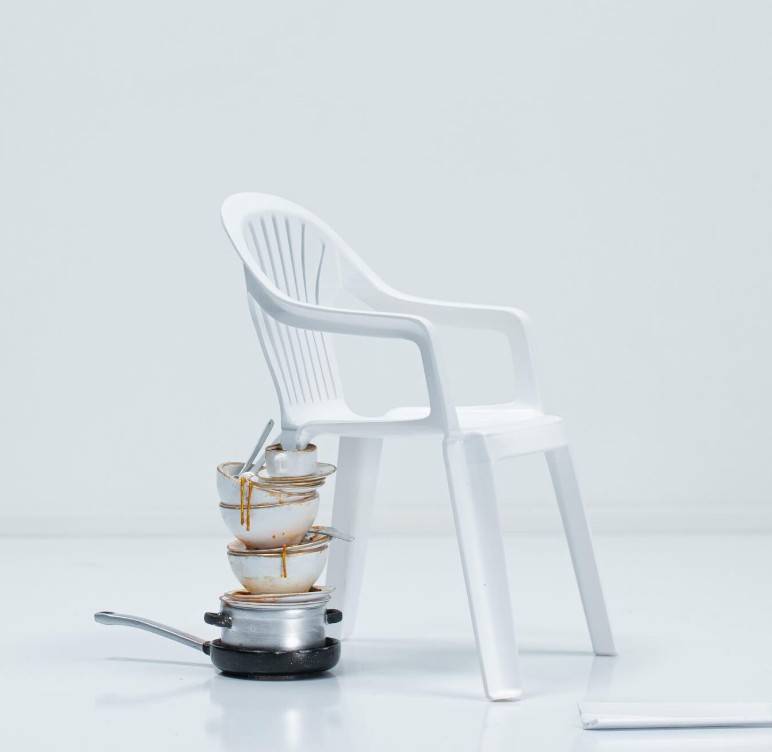
A miniature white monobloc armchair with one broken leg, propped up on a stack of dirty dishes, cups and pans, the snapped leg lying on the floor beside it

Eindhoven · The Netherlands

Niels Hoebers

Monobloc Adaptations, since 2023. The stop-motion artist takes broken monoblocs and rebuilds them as 1:6 miniature sculptures, each an edition of one. A snapped leg becomes a stack of dirty dishes: what's for dinner tonight?

nielshoebers.nl ↗

Solve theænigma.

A hand-painted QR code with the æ mark at its centre

Be original. Don't copy.

Order · Editions

Come havea seat.
Original One is made to order in Trento for €995 including VAT. Write to us to order a chair or to commission an edition.
extra@ordinaere.com

Or call +34 679 454 692

  • Original One€995 · made to order
  • PRELOVED · CHAQUIRAEditions of 9 · on application
  • Your editionArtists, makers, brands
  • Design rightsEUIPO Registered Design